

From Lab to Factory The Liquid Blush Manufacturing Process Every Beauty Brand Owner Should Understand
When you source liquid blush for your beauty line, it is simple to zero in just on the end color and wrap. But wise buying leads and line starters grasp more. They see the value in knowing how liquid blush truly gets built. This knowledge lets you pose the correct queries. It also aids in managing output and crafting a stronger item.
The liquid blush field has expanded quickly. It offers real, mixable hue with a clean, moist look. If you start a fresh range or grow an ongoing one, grasping the making steps sets plain hopes. Moreover, it helps you pick the best plant ally.
This piece guides you through the whole path. It runs from early mix in the lab to done items set for delivery.
Why Understanding the Manufacturing Process Matters for Brand Owners
Plenty of fresh lines face shocks from wait periods, lowest buy amounts, or output problems. When you understand the inner workings, you judge sellers better. You bargain sharper too. Plus, you dodge usual traps.
Take one case. The gap between a fair liquid blush and a top one often ties to mix steadiness, color spread, and how the recipe lasts through time. Such points get set early on.
Overview of Liquid Blush Types
Liquid blushes generally fall into a few main categories:
-
Water-based emulsions (lightweight, dewy finish)
-
Oil-based or hybrid formulas (more buildable, longer wear)
-
Gel textures (jelly-like feel with high pigmentation)
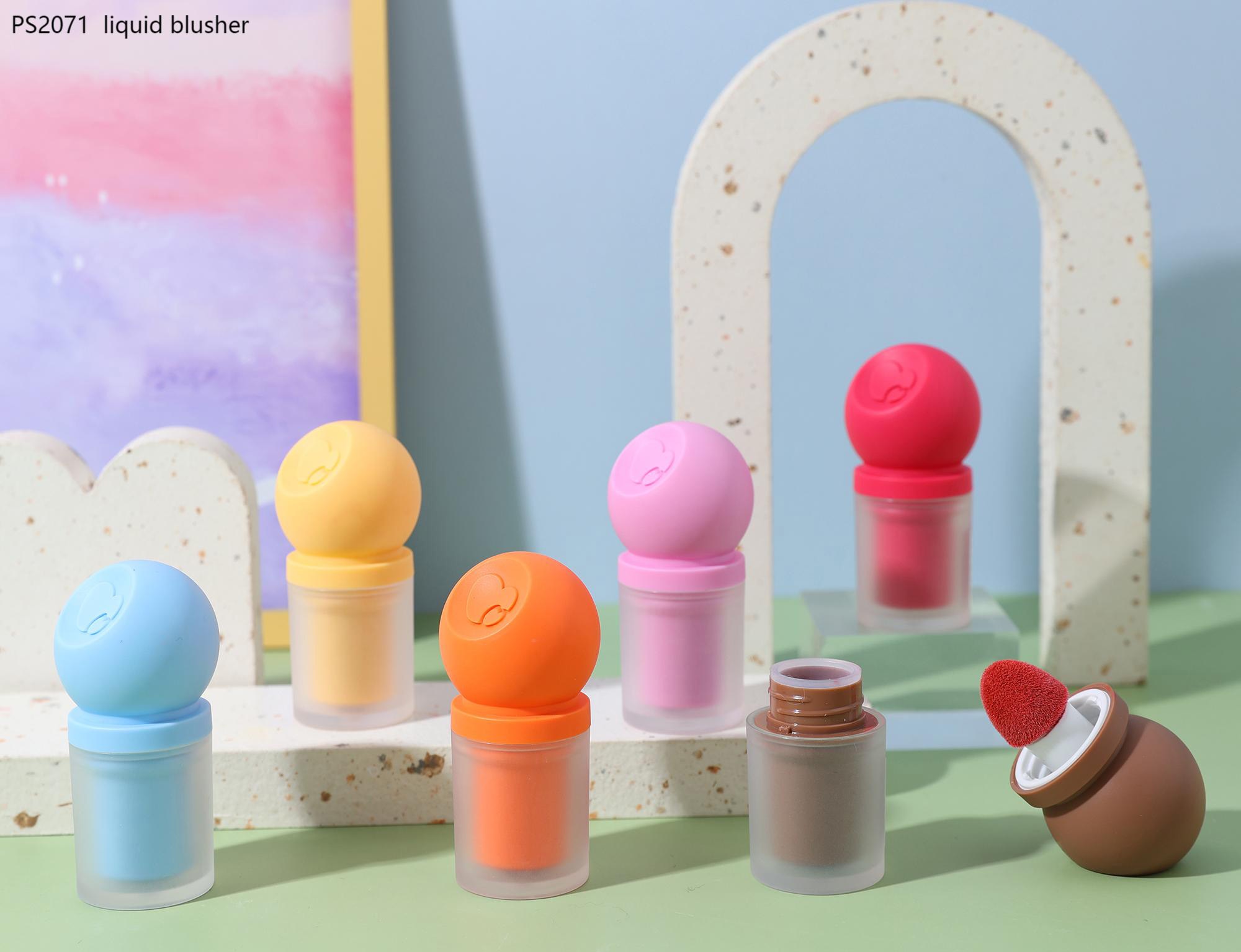
Each type requires slightly different production methods. The popular PS2071 Liquid Blusher, for instance, features a smooth liquid consistency with bold color payoff and easy application.
The Liquid Blush Manufacturing Process: Step by Step
Turning raw ingredients into a smooth, long-lasting liquid blush involves several precise stages. Each step plays a critical role in the final product’s texture, color payoff, and stability. Here’s how a professional cosmetics factory brings a liquid blush formula from the lab bench to mass production.
1. Formulation Development in the R&D Lab
Everything starts in the laboratory. Chemists test different combinations of ingredients to achieve the desired color, texture, and performance.
Key ingredients usually include:
-
Emulsifiers to blend water and oil phases
-
Pigments and colorants for shade matching
-
Humectants and skin-conditioning agents
-
Preservatives and stabilizers
Formulators spend weeks testing stability — checking how the product holds up under heat, cold, and time. A good lab will run centrifuge tests, freeze-thaw cycles, and real-time shelf-life studies.
2. Raw Material Sourcing and Quality Check
Once the formula is approved, the factory sources raw materials in bulk. Every batch of pigments, oils, and emulsifiers gets tested upon arrival.
Reputable manufacturers maintain strict incoming quality control. They reject any material that doesn’t meet specifications. This step prevents color variation between production batches — a common complaint from brands that work with lower-tier suppliers.
3. Mixing and Emulsification
This is the heart of the process. Ingredients go into large mixing tanks under controlled temperature and high-shear mixing.
Technicians carefully add the water phase and oil phase separately, then combine them. The goal is a stable, uniform emulsion. Too little shear and the product separates on the shelf. Too much and the texture becomes too thin.
For liquid blush, operators monitor viscosity closely. The PS2071, for example, aims for a smooth, flowing consistency that’s easy to dispense but not runny.
4. Filling and Packaging
After mixing and quality approval, the liquid blush moves to the filling line. Modern factories use semi-automatic or fully automatic filling machines depending on batch size.
Each bottle or tube gets precise filling to avoid weight variation. Then comes capping, labeling, and outer packaging. Many brands choose convenient applicator bottles or dropper styles for better consumer experience.
5. Final Quality Inspection and Testing
Before any product leaves the factory, it goes through final checks. These include:
-
Appearance and color consistency
-
Microbiological testing
-
pH and viscosity verification
-
Packaging integrity
Only batches that pass all tests get approved for shipment.
Typical Production Batch Sizes for Liquid Blush
-
Lab scale: 5–20 kg (for samples)
-
Pilot batch: 50–200 kg
-
Commercial production: 300 kg to over 5,000 kg per run
Common Challenges in Liquid Blush Production
Hue fit across varied light setups proves hard. A tone that shines in the lab may alter a bit under shop lights. Strong plants keep full hue logs. They use light meters to hold steady.
One more hurdle lies in stopping splits over days. Top recipes draw on fresh steady parts. Thus, the blush keeps even after months on racks.
What Brand Owners Should Look For in a Manufacturer
Experienced procurement teams pay attention to these details during factory audits:
-
Dedicated R&D team with formulation expertise
-
In-house testing laboratory
-
Clean, temperature-controlled production workshops
-
Traceable batch records
-
Experience with export regulations (FDA, EU, etc.)
Key Process Comparison Table
| Stage | What Happens | Why It Matters for Brands | Red Flags to Watch |
|---|---|---|---|
| Formulation | Lab testing and stability trials | Determines final performance | Very short development time |
| Mixing | High-shear emulsification | Affects texture and longevity | Inconsistent viscosity between batches |
| Filling | Precision filling & sealing | Prevents leakage and waste | Manual filling for large orders |
| Quality Control | Multiple inspection points | Ensures batch-to-batch consistency | Limited testing capabilities |
Brief Introduction to Limei
Limei is a trusted cosmetics supplier with over 56,000 square meters of modern manufacturing facilities. The company specializes in ODM and OEM production of color cosmetics and makeup tools, including liquid blush, foundations, and lip products. With experienced R&D teams, advanced production lines, and strict quality systems, Limei supports both startups and established brands with flexible MOQ, fast lead times, and reliable product consistency.
Conclusion
Grasping the liquid blush making steps aids your shift from plain buys to sure line growth. When you know each phase—from lab mix to end review—you decide wiser. You also team better with your making ally.
The best plant does more than make items. It acts as your team branch. Thus, it helps bring steady output that buyers adore.
Set to talk your liquid blush plan? Reach the Limei group today. They guide you on current recipes. They show the PS2071 Liquid Blusher too. Plus, they aid in tailoring the right fix for your line.
FAQs
How long does the liquid blush manufacturing process usually take?
From early mix to done goods, the first buy often spans 45 to 60 days. Later buys speed up once the recipe sets.
What is the minimum order quantity for liquid blush production?
Plenty of pro plants give bendy MOQ from some hundred pieces for set recipes. This opens doors for rising lines.
Why does liquid blush formulation matter so much?
The fit recipe shapes color return, mix ease, hold span, and rack steadiness. Weak liquid blush may split or shift hue over time.
How can I ensure color consistency across different batches of liquid blush?
Team with a plant that draws on light meters and holds tight base part rules. Ask for lot match samples in making.
Is it possible to create custom shades and textures for my own liquid blush line?
Yes. Skilled cosmetics sellers like Limei build tailored recipes and tones. They still offer fair MOQ for fresh lines.