
How Should Beauty Brands Define a Private Label Mascara Product Brief Before Sampling
A mascara brief becomes useful when it describes a real product rather than a string of familiar beauty terms. “Volumizing and lengthening” sounds clear at first, yet it leaves a manufacturer guessing about the number of coats, the amount of separation, the brush feel and even the way the product will be removed. Before sampling, a brand needs to put those choices into everyday language that the development team can test. Zhejiang Limei Cosmetics Co., Ltd. lists mascara within its color cosmetics range, so buyers can begin with an existing format and then explain where their own concept needs to differ.
Start With the Way the Mascara Will Be Used
Picture the person applying the product on an ordinary morning. Is she trying to finish both eyes quickly before work, or is she willing to build several coats for a stronger evening look? The answer changes what “good performance” means. A quick daily mascara may need clean separation and predictable pickup in one or two passes. A more dramatic concept can allow slower layering, provided the lashes do not become heavy or uneven.
The routine matters too. Some users curl their lashes first; others apply mascara over a primer. A brand may want a natural first coat that can still be built later, or it may prefer immediate black definition. Writing down that use case gives the formulator and packaging team something concrete to work toward.
The mascara category can help a buyer identify possible formats, including mascara and primer references. It does not replace the brief. A new SKU still needs its own description of the intended result, application, package and market.
Describe What Reviewers Should Actually See
Marketing words are useful only after the team agrees on what they mean. For length, will reviewers look for a cleaner extension at the tips, stronger root-to-tip definition, or both? For volume, does the first coat need to look fuller, or is the effect expected to appear after the second and third coats? These are small distinctions on paper, but they can lead to very different samples.
It also helps to record the result the brand does not want. A sample might deposit too much product on the first stroke, leave the outer lashes stuck together or become difficult to refresh after it sets. During a planned wear review, the team may also watch for visible transfer or flakes. At this stage, those points are observations for comparing samples. They are not yet advertising claims.
Product references make the conversation less abstract. The published description for MA0345 mascara mentions intense pigment payoff and consistent coverage. MA0332 mascara is described in terms of buildable volume, black pigment and use with lash extensions. Those descriptions apply to the named products. A buyer can use them to explain a direction, but the new formula and package still need their own review.
Review the Formula and Applicator Together
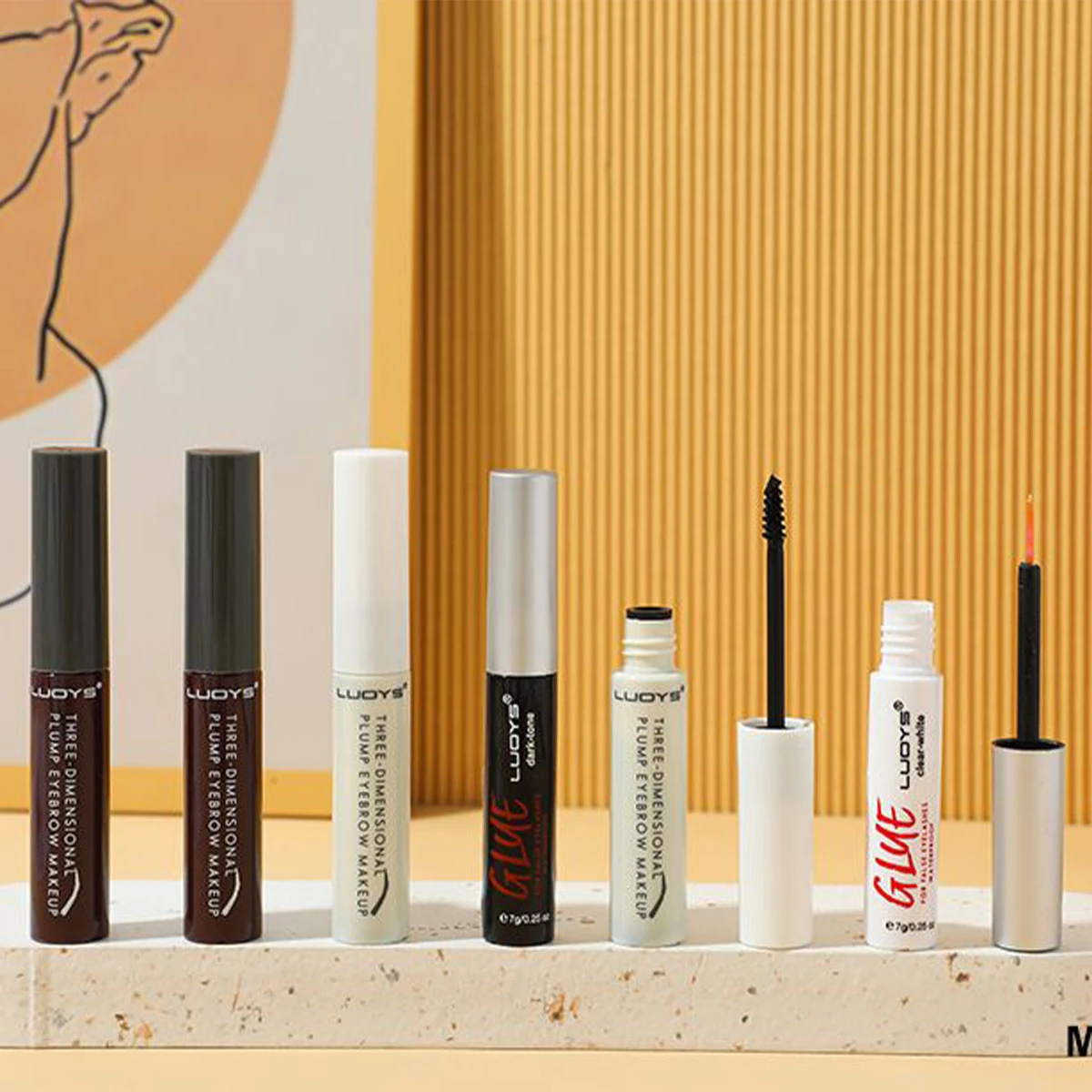
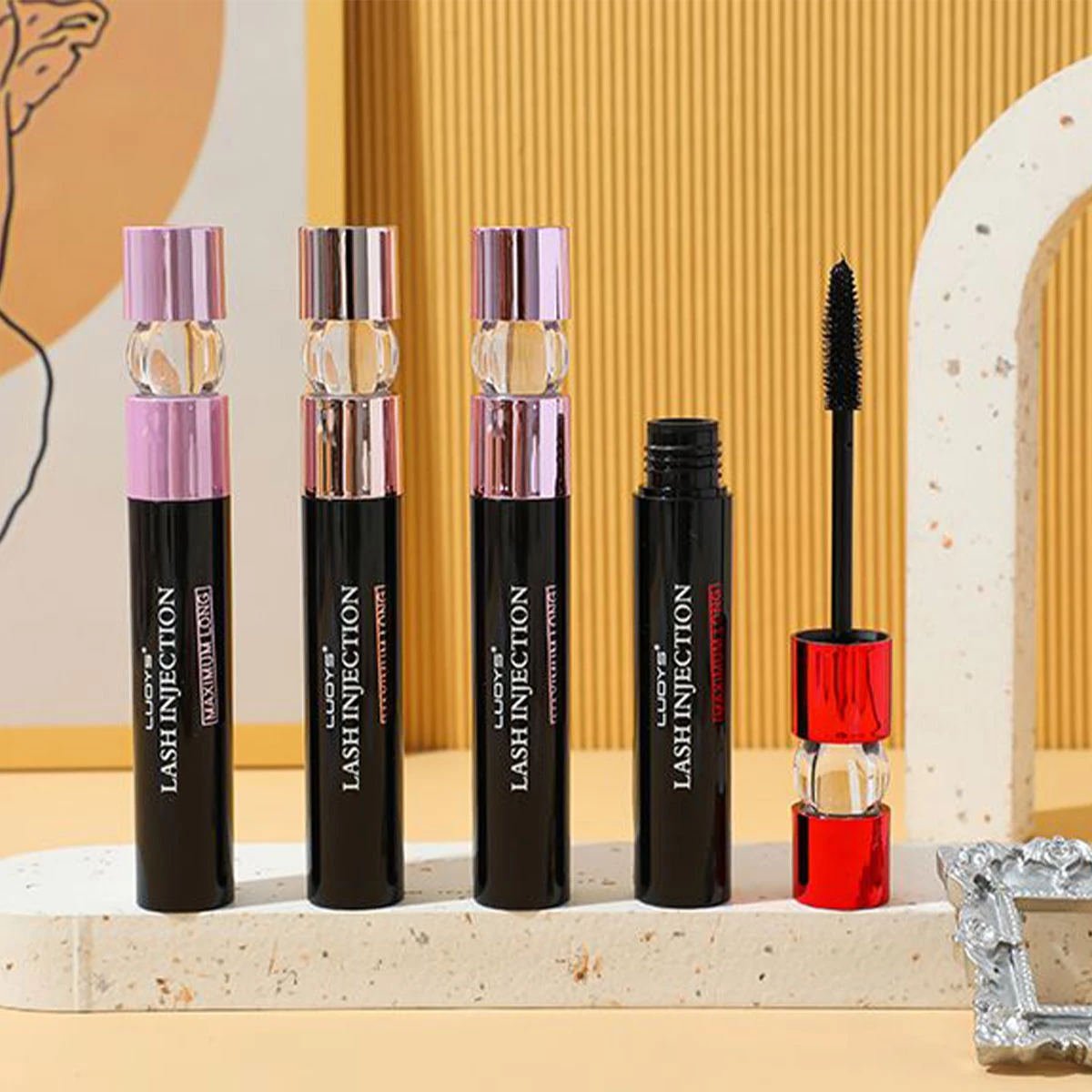
Mascara is a package-and-formula system. The brush moves product through the lashes, while the wiper controls how much formula remains on the brush as it leaves the bottle. Stem length, container opening and formula flow all affect the amount available for each coat. Testing the bulk with a convenient but unrelated brush can therefore give a misleading impression.
Instead of asking for an unusual-looking applicator, describe the job it needs to do. Perhaps the brush has to reach short inner lashes without leaving a large deposit. Perhaps the priority is quick coverage, or a combing action that keeps the lashes visibly separate. That functional description gives the supplier more room to suggest a workable brush and wiper combination.
Filled samples need closer attention than an empty component. Look at the brush when it first comes out of the bottle. Is there a lump of product at the tip? Does the brush carry a similar amount after several openings? Does one eye receive noticeably more product than the other because the brush reloads unevenly? If the brush or wiper changes later, repeat this review with the approved formula rather than assuming the difference is cosmetic.
Use the Same Method for Every Sample
Unstructured try-ons produce noisy feedback. One person applies a single coat on curled lashes, another uses three coats over primer, and both report whether they “like” the result. The comments may be honest, but they do not tell the supplier which version came closer to the brief.
A short review method is usually enough. Note how the lashes are prepared, how many coats are applied and how long each coat is left to set. Use the same sequence for every version. Immediate notes can cover brush control, color, separation, coverage and clumping. Later checks can focus on the agreed wear concerns, followed by removal with the method the target customer is likely to use.
Personal taste will still appear, and that is not a problem. One reviewer may prefer a soft first coat while another likes dense coverage. When opinions split, return to the intended customer and the written result. A revision request is much easier to act on when it says “the second coat joined the outer lashes” rather than “make it better.”
Ask Package Questions Before Artwork Is Final
An attractive tube can still be the wrong tube for the formula. The filled combination needs to close properly, retain the wiper and allow the brush to pick up a usable amount of product after storage and repeated handling. An empty package can confirm appearance and basic movement, but it cannot show how the complete system behaves.
Tell the supplier how the finished item is expected to be stored, transported and used. Then ask which stability, compatibility, filling and finished-product checks fit that exact combination. Copying a generic test list from another mascara is less useful because the formula, component and destination market may be different.
Artwork belongs to the approved version, not merely to the product name. A change in formula, shade, fill quantity, component or market can affect ingredient information, directions, warnings or other required text. The responsible teams need to review the finished product for its intended destination before the artwork is released.
Keep Desired Claims Separate From Approved Claims
The brief can include wording the brand hopes to use, but that wording is still a request. Record the proposed claim, where it will appear and what kind of support the team expects to have. Technical and regulatory reviewers can then decide whether the formula, testing and documentation support that language or whether the wording needs to change.
Be especially careful with broad terms such as waterproof, long wearing, suitable for sensitive eyes or compatible with lash extensions. None of them should be treated as a default feature of mascara. The claim has to match the exact formula, intended use and available evidence.
Internal observations have a narrower purpose. If reviewers see no flakes during one defined wear check, they can record that result and compare it with the next sample. A single internal check does not establish a universal no-flake claim. Keeping that distinction clear prevents sample notes from quietly turning into unsupported packaging copy.
Record the Version That Was Approved
Once the team agrees on a sample, the approval record needs more detail than “use the last one.” Identify the formula version, shade, brush, wiper, bottle, cap, decoration, fill quantity and artwork. A retained physical sample is helpful when practical, but it should be connected to the written record so that the reference can still be understood months later.
The same record can explain what happens when something changes. A substitute component or raw material may affect application even if the commercial name stays the same. Written change communication lets the buyer decide whether the update needs another filled sample, a focused check or revised documents.
Before requesting samples, buyers can review Limei’s order and client services and organize the information the supplier will need. Send the target lash effect, expected application, package direction, market and proposed claims through the contact channel. That gives both sides a practical starting point for discussing sample scope and unresolved technical questions.
Conclusion
A workable mascara brief does not need impressive language. It needs a recognizable user, a clear lash result and a repeatable way to judge whether the sample reached it. Formula, brush, wiper and package should be reviewed as one system, while claims remain tied to evidence rather than preference. When the approved version is recorded in enough detail, the development team and the buyer are far less likely to make decisions from different versions of the same conversation.
FAQ
What belongs in a private label mascara product brief
Include the intended user, desired lash result, color and formula direction, brush and wiper needs, package, application method, wear concerns, removal method, destination market and proposed claims. The brief should also explain how samples will be compared and which details must be fixed before production.
Should a brand choose the brush before finalizing the formula
The team can explore brushes early, but final approval needs the intended formula, brush, wiper and container together. Changing one part can alter pickup, deposit and separation, even when the bulk formula remains the same.
How many coats should reviewers apply
Use the number that matches the intended consumer result and keep it consistent across versions. If both first-coat definition and buildability matter, record the result after each coat instead of changing the method from one sample to the next.
Is one successful wear check enough for production approval
No single try-on answers every question. It can provide useful feedback on application and wear, but stability, package compatibility, filling, regulatory review and batch controls still depend on the exact product and market.
What if the brush or wiper changes after approval
The buyer should learn about the change before production. Review the replacement component with the approved formula and check whether pickup, application, wear or package operation has shifted.