

How to Plan a Private Label Foundation Shade Range Before Sampling
A private label foundation shade range should be planned as a system, not assembled from a row of attractive bottles. Before sampling starts, a brand needs to decide who the range must serve, how depth and undertone will be distributed, and what evidence will determine whether two shades are usefully different. A clear plan gives the manufacturer something testable and helps the brand avoid paying for shades that look distinct in a spreadsheet but collapse into the same result on skin.
Define the Range Around Real Customers
Start with the people expected to buy the product. Sales regions, retail channels, price position and existing customer data are more useful than a generic target such as “all skin tones.” A new online brand may need a compact first range with strong navigation. A retailer serving several markets may need more depth steps and a more detailed undertone structure.
Write down what evidence supports the initial range. Useful inputs include sales data from comparable complexion products, shade-match inquiries, retailer feedback and structured testing with intended users. Competitor ranges can reveal familiar naming conventions, but they should not substitute for the brand’s own demand evidence. Copying another range may reproduce its gaps while giving no reason for the chosen quantities.
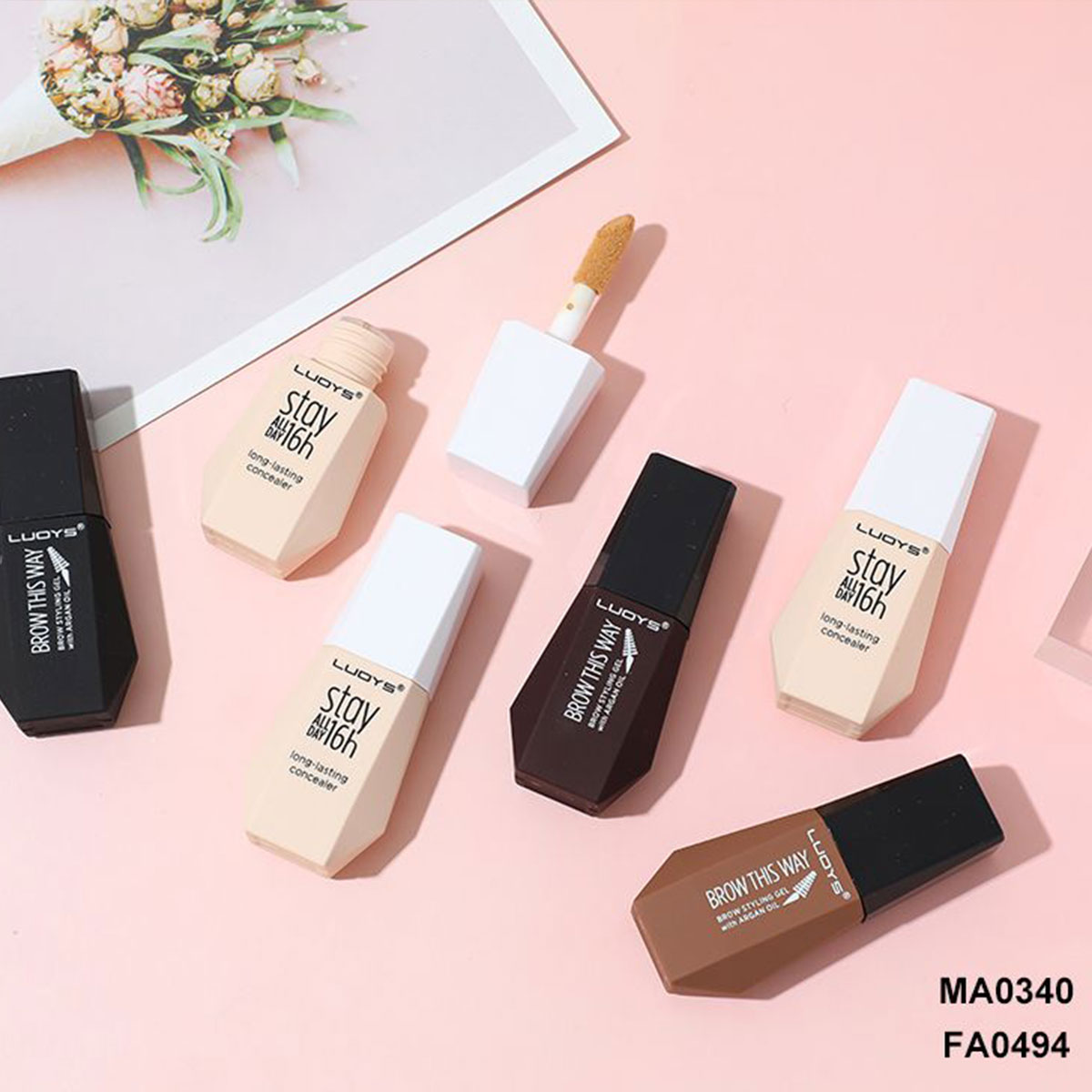
The current foundation category from Zhejiang Limei Cosmetics Co., Ltd. shows that foundation can sit in different product and package formats. Select the format before finalizing the shade brief because formula behavior, coverage and packaging can affect how a shade is perceived and evaluated.
Separate Depth From Undertone
Depth describes how light or deep a shade appears. Undertone describes the color direction underneath that depth, commonly discussed with terms such as warm, cool, neutral, olive or red. Those labels are working language, not universal measurements. Two teams may use “warm” differently unless they also exchange physical standards and agreed visual references.
Build the first map as a grid. Put the intended depth progression on one axis and the undertone families on the other. Empty cells are acceptable. The aim is not to create every mathematical combination; it is to expose where the range is crowded and where a customer group has no plausible option.
Check the spacing at both ends as carefully as the middle. Adding one very light and one very deep shade does not create balanced coverage if most intermediate steps cluster around similar depths. Likewise, a large shade count can still be narrow when nearby shades differ mainly in name.
Decide What the First Sample Round Must Prove
The first laboratory set does not need to be the entire commercial range. It needs to answer the highest-risk questions. Ask for anchor shades across the depth spectrum, plus selected undertone variations where the team expects matching difficulty. This creates a manageable diagnostic set before every shade is multiplied.
For each anchor, define what reviewers will assess: wet appearance, dry-down or set appearance, coverage, finish, blend at the edge, change under different lighting and visible contrast from neighboring anchors. Record the waiting time before comparison so one sample is not judged immediately while another is judged after it has settled.
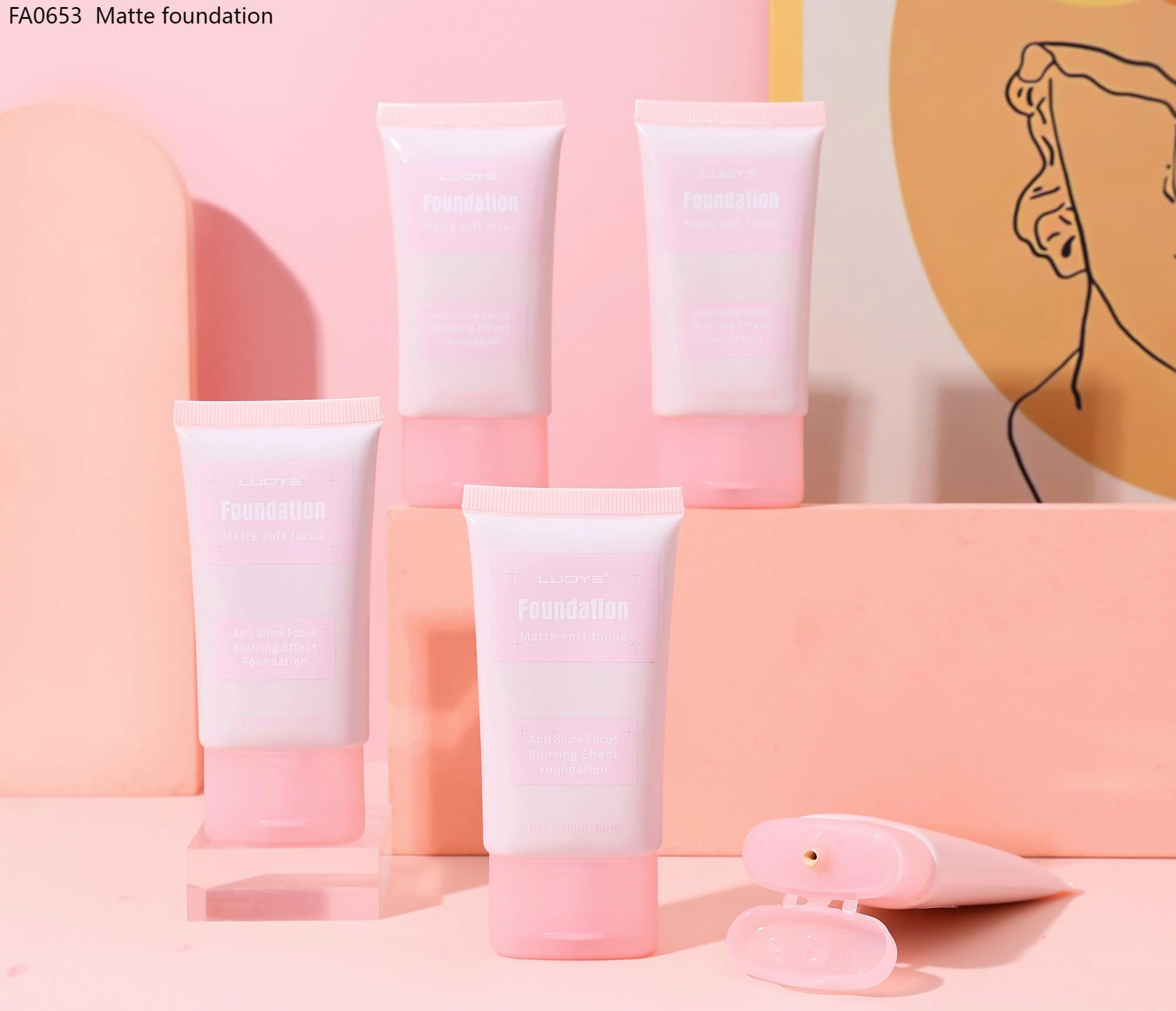
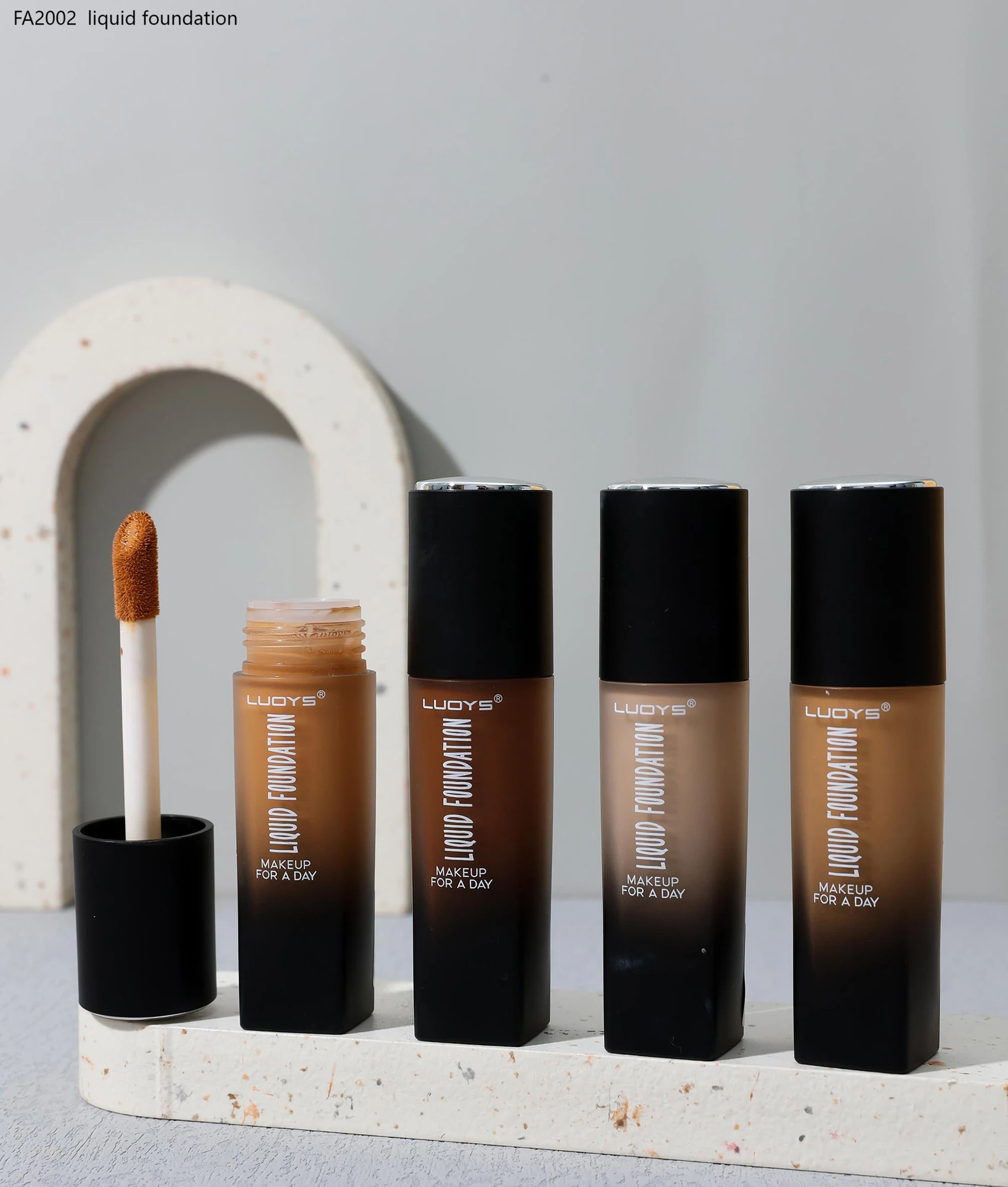
Do not approve a shade from the container alone. The same liquid can look different in a bottle, on a mixing card and on skin. The published description for FA0653 matte foundation identifies a matte foundation example, while FA2002 liquid foundation is a separate liquid foundation example. Neither product listing establishes a custom shade range; it illustrates why the exact formula and format must stay attached to every shade decision.
Use a Consistent Evaluation Method
A useful review session controls the variables that can mislead the team. Test clean, prepared skin. Apply a repeatable amount with the agreed tool. Compare shades in more than one lighting condition, including neutral indoor light and indirect daylight when practical. Photograph the result with a color reference, but do not let the photograph replace direct observation.
Reviewers should score the same questions in the same order. Free-form comments alone make it difficult to compare opinions. A simple record might include sample code, depth assessment, undertone assessment, edge blend, appearance after the agreed interval, closest neighboring shade and recommended action.
Ask testers to distinguish “not my preferred finish” from “not a usable shade match.” Texture, coverage and shade are connected in the wearing experience, yet they are different development decisions. If every concern is reported as a color problem, the laboratory may adjust pigment when the real issue is application or finish.
Protect Sample Identity and Version History
Give every sample a unique code. The code should connect the physical container, evaluation sheet, formula version, shade target and date. Avoid labels such as “new warm beige” that become ambiguous after several rounds.
Keep a decision log. For each sample, state whether it is rejected, retained as a reference, revised or approved for the next stage. If a shade moves warmer or deeper, record the instruction and the reason. Photographs can support the log, but the approved physical standard and written specification should remain clear.
Version control becomes especially important when several reviewers work in different locations. The OEM and ODM service overview can frame an early development discussion, but the brand and manufacturer still need an order-specific process for sample naming, shipping, review and approval. Agree on who consolidates feedback so the laboratory does not receive conflicting instructions from marketing, product development and retail teams.
Connect the Shade Plan to Packaging and Claims
Shade architecture affects more than color development. Each commercial shade may require artwork, a label, a barcode, inventory space and a forecast. A wide range with weak demand assumptions can tie up cash in slow-moving stock. A small range with poor spacing can create returns and frustrated customers. Treat shade count as both an inclusion decision and an operating decision.
Packaging also changes the review. A transparent bottle can make shade differences visible before application, while an opaque pack relies more heavily on labels and digital navigation. Confirm that the selected package can be filled and identified consistently. Do not infer compatibility from a visual mockup; evaluation must use the intended formula and component.
Marketing language needs its own evidence. Terms such as long-wearing, transfer-resistant or suitable for a particular skin type should not be approved merely because a sample looks promising. Claims, safety documentation and destination-market requirements depend on the final product and the evidence prepared for it.
Approve the Range in Stages
Move from anchor approval to gap review, then to the complete set. Once the anchors are credible, add intermediate shades where testers repeatedly fall between two options. Add undertone alternatives where the same depth consistently produces mismatches in different color directions.
Before production approval, review the range as a whole. Arrange shades in the intended order and check that names, codes, labels and physical samples agree. Confirm which version controls production and what happens if a raw material, package or processing condition changes. A shade approval without change control is only a snapshot.
Zhejiang Limei Cosmetics Co., Ltd. works across color-cosmetics categories for B2B buyers. A brand that has mapped its customers, anchor shades and evaluation method can use the contact channel to discuss a project-specific foundation brief. The strongest starting document is not a wish for “many shades,” but a reasoned map of who each shade is intended to fit and how that decision will be tested.
Conclusion
A private label foundation shade range becomes easier to develop when depth, undertone, formula format and commercial demand are planned together. Begin with customer evidence, use anchor shades to test the structure, evaluate samples under consistent conditions and preserve every decision by version. That approach reduces vague feedback and gives the full range a defensible logic before production commitments grow.
FAQ
How many shades should a private label foundation launch with?
There is no universally correct number. The range should reflect the intended customers, channel, budget, formula, testing results and inventory plan. A smaller range with deliberate spacing can be more useful than a larger range built from weak assumptions.
Should a brand sample every planned foundation shade at once?
Not necessarily. Sampling selected anchor depths and undertones first can reveal problems in the range structure before the brand funds a complete set. The full commercial range still needs evaluation and approval later.
What is the difference between foundation depth and undertone?
Depth describes how light or deep a shade appears. Undertone describes its underlying color direction. Both need physical references because naming conventions vary between teams and markets.
Can foundation shades be approved from photographs?
Photographs are useful records, but cameras, screens and lighting can shift color. Approval should include controlled observation of coded physical samples on relevant testers, using a documented method.
What should be included in a foundation shade brief?
Include the customer profile, product format, coverage and finish targets, planned depth and undertone map, anchor references, evaluation method, sample codes, decision owners, packaging assumptions, destination market and required evidence for any claims.