

EU Fragrance Allergen Labelling After July 2026: What Should Private-Label Buyers Lock Before Printing?

The buyer may approve the replacement fragrance and leave the artwork untouched, so the two approvals end up describing different samples. The carton may fit the sample perfectly and still carry the earlier wording. Neither will opening a folder called ‘allergen report’ unless the report names the fragrance now being purchased. For an EU order after July 2026, somebody needs to account for the step between the fragrance purchase and the names sent to the printer. An artwork file gives the printer the words to reproduce, with little indication of how anybody arrived at them.
Which deadline applies to the order now being printed?
The two transition dates can cause confusion on repeat orders. A product name may have been on sale for years, while the units in the next delivery have yet to enter the market. Those are different circumstances.
New batches versus transitional inventory
It helps to read Commission Regulation (EU) 2023/1545 with the movement of the goods in mind. The transition allowed noncompliant products meeting its conditions to be placed on the market up to 31 July 2026. For stock qualifying through that earlier placement, making it available can continue until 31 July 2028. The wording needs another look because the regulation both extends individual allergen labelling and changes existing entries. Take an order being planned in October 2026. Familiarity with its product name says nothing about whether the goods on that order are the earlier stock concerned by the transition.
Consider a repeat SKU with some units left in distribution and another batch about to be manufactured. The older units may have a market-placement history to assess. The new batch cannot borrow that history from them. That is why the first catalogue date is of so little help to the person deciding what to print: it describes the product name’s history, not the status of the units on this order.
Evidence of first market placement
The European Commission’s current explanation describes the later transition in terms of products already placed on the market before the earlier deadline. That still leaves work for the responsible person if a buyer wants to rely on it. That assessment concerns the batches actually being sold, including their history before the deadline. A date on the printing invoice answers when packaging was produced. The gap between printing a carton and placing the packed goods on the market is precisely what that invoice leaves unexplained.
An order might include stock left from an earlier delivery as well as units from the next production run. Combining their quantities under one SKU would hide the very difference the responsible person has to examine. The distribution information and batch details help explain which goods the transition argument concerns. With a first launch, there is no such earlier batch to point to. The pack has to be developed for the updated requirements.
What must the fragrance declaration actually cover?
A declaration may arrive with the sampling paperwork and stay there through several formula changes. Before using its numbers, the reviewer has to establish what its material code refers to. An attachment for a discarded sample cannot describe its replacement merely because both samples went by the same scent name. Even a recent report needs its scope checked against the expanded requirements before the reviewer can use it.
Match declarations to the commercial formula
The useful starting point is the formula chosen for manufacture. If a fragrance was replaced after the first sample, the old declaration’s quantities cannot simply be carried over. The supplier and material reference on the report must lead back to the input being bought, with the document revision and date available to the reviewer. That makes it possible to tell whether a formula change was reflected in the information used for the label calculation.
A blank line also needs interpretation. The former list may have been all that the supplier was asked to assess when it prepared the report, leaving a newly covered allergen outside that work. Entering zero would turn that omission into a number without a measurement or applicable assessment behind it. A result for the substance, supplied within the report’s applicable scope, would allow the reviewer to make the entry on a different basis. The report’s scope tells the reviewer which of those situations it represents. The expanded requirements make this a particularly poor place to rely on an old attachment without reading it.
Account for every contributing ingredient
The perfume report describes what is inside the supplied blend. An extract from another supplier has not been accounted for yet. Where the extract contains the same allergen, its contribution goes into the same total as the perfume’s contribution. This is work for the formulation team, which has access to the complete formula and can determine which inputs need to be brought into the assessment.
A document headed ‘IFRA conformity’ may answer a question about the fragrance without giving the quantitative breakdown needed here. A safety data sheet can leave the same gap. Across face makeup formats and skin and body products, a buyer might choose one scent description for the range. That would still leave the formulator working with each product’s dose and any aromatic extracts particular to that formula. The commercial scent name is convenient for the catalogue. The raw-material code and actual inclusion level are what the reviewer needs to calculate a concentration.
How do raw-material values become a finished-product label?
The supplier’s percentage describes a raw material. The label decision concerns the finished cosmetic, so one more calculation is needed before those numbers mean anything for the pack.
Calculate contributions before comparing thresholds
The leave-on comparison is against more than 0.001%. For a rinse-off product, the stated threshold is more than 0.01%. In either comparison, the percentage belongs to the finished cosmetic. The supplier’s breakdown has to be reduced by the dose at which its material is used before it can enter that comparison. Which names then go on the pack depends on the applicable Annex III entry, including any conditions for grouping substances or naming them.
For the arithmetic alone, take a hypothetical fragrance dose of 0.50% and an allergen content of 0.40% within that fragrance. Neither figure describes a supplier’s product. Multiplying the two percentages gives 0.50 × 0.40 ÷ 100 = 0.002% in the cosmetic. With no other source and an Annex III entry using the thresholds above, that is above the leave-on threshold but below the rinse-off threshold. The difference comes from the product’s use category; the arithmetic has stayed the same.
Now add an extract containing that same substance. Its contribution has to enter the total before the comparison is made. Leaving out the extract would underestimate the finished concentration, although the perfume arithmetic itself had been done correctly.
Resolve grouped entries and uncertain values
A value close to a threshold deserves its original precision. Rounding early can shift the apparent result. A declaration giving ‘less than’ a certain amount calls for more thought than entering zero. If the threshold lies between the supplier’s low and high values, either side of it remains possible. Taking the low value would produce one answer; taking the high value could produce another. The worksheet has no basis yet for choosing between them. It is worth asking whether the supplier can narrow that interval. If the interval remains, the reviewer needs to address both possible outcomes before settling the wording.
Grouped entries can create another trap in an otherwise careful worksheet. When Annex III calls for a combined concentration, comparing each supplier line separately may miss what the entry requires. Its naming conditions matter too. Keeping the input documents and unrounded calculation makes a later review possible. The finished handover to the printer should contain the wording arrived at through that review, so the print supplier is not left choosing names from a chemical breakdown.
What should be locked in the print release package?
Printing fixes the words to the pack, but several people may have contributed to them. The release file needs to show which formula those words describe and who approved that combination.
Approve one formula and artwork combination
The HPRA’s fragrance allergen guidance is useful when planning the updated label, but the print handover has a more immediate problem: a folder can contain the latest formula and yesterday’s artwork. Both files may look complete. The calculation might have been updated after sampling while the artwork was still based on the previous result. The reviewer can compare those two versions of the ingredient wording while the artwork is still editable, rather than after the carton has been printed.
An approval naming the SKU, market, formula code and artwork revision removes much of that ambiguity. It should also identify the regulatory reviewer and the person authorizing print. There is a physical packaging question as well. A longer panel can mean moving other elements on the carton, which is easier to deal with while the layout can still be edited. The reviewer also has the container to consider. Making the text fit on the carton settles only the carton part of that packaging review.
Reopen the review when an input changes
A replacement perfume might be proposed after the pack has been signed off. The nose is comparing scents, while the worksheet is comparing quantities of individual substances. A different dose of the same blend changes those quantities too, even where the scent name on the brief stays the same. Before printing proceeds, the change needs to go back to the formulation and regulatory teams. Their review can establish whether the former result still describes the formula, or whether the calculation and wording need to be done again.
On the next order, someone may pick up the file used for the previous print run. It can be hard to tell it from its replacement when both files look complete and neither is marked as old. A visible superseded status on the earlier file makes the choice less ambiguous for the person sending it to the printer. If the only explanation is an email saying ‘same fragrance,’ that person still has no way of knowing what the review covered.
Need to coordinate an EU cosmetic formula and packaging brief?
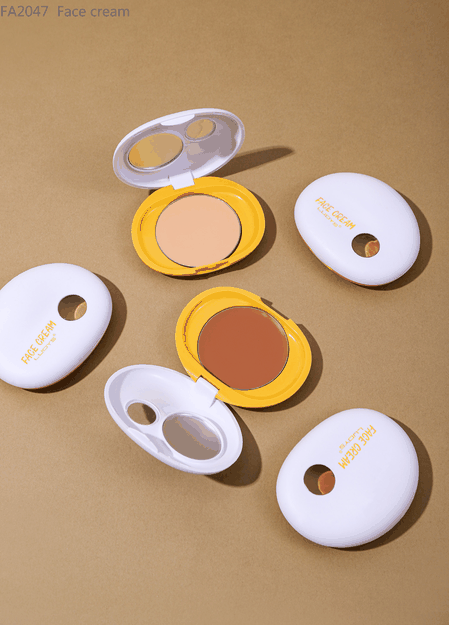
The makeup and skincare catalogue of Limei Cosmetics Co., Ltd. includes FA2047 face cream. A buyer can refer to that product when opening the discussion. Its OEM development process describes how a brief moves through requirement confirmation and sampling towards packaging. For an EU enquiry, how the cosmetic will be used helps frame the discussion about its fragrance. The proposed pack and print date then give that discussion a practical deadline for settling the ingredient wording. Before selecting the artwork, the buyer needs to know whether the declarations for that formula can be supplied for the responsible person’s review. The discussion also needs a named party to approve the ingredient wording once that review has been done. Otherwise, the printer may receive a file while the buyer and supplier are each still expecting the other to obtain the sign-off.
Conclusion
Printing is the point at which the formula discussion becomes words fixed on a carton. A perfume substitution during sampling can leave an older declaration in the folder even after the artwork changes, which is a reason to check which material the calculation used. Finding that old attachment before production gives the reviewer time to use the appropriate quantities and correct any affected wording. Earlier stock brings a separate question about when those units reached the market. New units need the updated requirements in their packaging work now. Keeping the approved formula identity and packaging files together gives the next order a reliable starting point, rather than another search through old emails.
FAQs
1. Can the label list only parfum?
The applicable Annex III entry determines that. Where the entry requires individual declaration at the finished concentration concerned, that name has to appear alongside the general fragrance wording. The reviewer still needs the product calculation to establish which entries apply.
2. Does fragrance-free mean no assessment is needed?
The relevant question is what is in the formula’s materials, including any extract. A formula without an added perfume blend can still need assessment for a substance coming from such an ingredient. Its composition is what the reviewer would examine.
3. Can a previous fragrance report support a repeat order?
The question on a repeat order is less about getting a new date on the report than about whether its contents still apply. Where the purchased material is unchanged, a report covering the updated requirements may still provide the quantities needed by the reviewer. Those quantities have to be calculated at the dose used for this order. Substituting that material would remove the basis for simply reusing the old result.
4. Is 31 July 2028 the deadline for a new EU launch?
The later date, 31 July 2028, concerns making qualifying earlier stock available. It does not move the July 2026 placement deadline for a new launch. The updated requirements therefore need to be addressed in a launch taking place after that earlier date.