

How Should Beauty Brands Define a Highlighter Product Brief Before Sampling?
A highlighter brief is useful when two people can read it and arrive at roughly the same idea of the product. That sounds obvious, yet many development requests still begin with a reference photo and a few words such as “champagne,” “glowy,” or “very shiny.” Those descriptions are enough to start a conversation, but not enough to judge a sample. Before sampling, a brand needs to decide which parts of the reference actually matter: the strength of the reflection, the amount of visible shimmer, the way the product picks up, the feel on application, or perhaps the compact itself. Putting those decisions into the brief gives the formulator some room to work while giving the brand a fair way to say why a sample is right or wrong.
What should a buyer settle before the first highlighter sample is made?
Start with the result on the skin. A development team can work with a broad visual direction, but “radiant” can describe anything from a barely visible sheen to a conspicuous reflective finish. If that difference is not settled early, several technically acceptable samples may still miss what the brand had in mind.
Format comes into the discussion at the same time. Pressed powder, cream, liquid, and stick products are not interchangeable versions of one idea. They differ in pickup, application, packaging, and the way their finish appears on the skin.
Describe the reference instead of merely sending it
Reference products are useful when the brief explains why they were chosen. One reference might have the right undertone but too much sparkle. Another might have the right texture but insufficient reflection. Writing those observations down gives the development team considerably more information than asking it to “make something similar.”
The same approach helps with shade. “Champagne” alone leaves plenty of room for interpretation. The brief can indicate whether the brand expects a warm or neutral base, whether the base color should remain visible after blending, and how prominent the reflective effect should be.
Payoff deserves similar treatment. Some highlighters are meant to show clearly after one pass; others make more sense when the user can build two or three light layers. Neither approach is inherently better. What matters is knowing which experience is being developed.
How can texture and application requirements be made specific enough to evaluate?
Texture is often described with words such as silky, creamy, smooth, or lightweight. Those words are useful in a concept deck, but during sample approval they need to correspond to something the reviewer can actually observe.
Consider a pressed highlighter. If the surface is quite firm, a brush may collect little product even though a finger swatch looks impressive. At the other extreme, a very soft pan can give strong pickup but leave more loose powder than the brand wants. Looking only at the swatch would miss both issues.
Review the product in the way a customer is expected to use it
A straightforward sample review can record the following:
| What to review | Practical question |
|---|---|
| Pickup | Does the intended applicator collect enough product without digging into the surface? |
| First application | Is the initial effect too weak, appropriate, or stronger than intended? |
| Buildability | Can another layer be added without the finish becoming uneven? |
| Blending | Can the edge be softened without losing the effect completely? |
| Fallout | Is loose product noticeable during normal application? |
| Pan surface | What happens after the same area has been used several times? |
This kind of record is more informative than a score such as “texture: 8/10.” It tells the next person reviewing the sample what actually happened.
Particle appearance also belongs here. A fine reflective effect can look relatively smooth from normal viewing distance, whereas larger visible particles may create a deliberately sparkling result. The choice depends on the concept. Asking for “more glow” when the actual problem is particle appearance can send the next sample in the wrong direction.
How should a brand approve shade when reflection changes under different light?
Highlighter is awkward to approve from photographs because reflection changes as the face, camera, or light moves. Two samples can appear nearly identical when viewed straight on and noticeably different once the viewing angle changes.
That makes a physical reference particularly valuable. It does not eliminate subjective judgment, but it gives the buyer and development team the same object to compare.
Separate base shade from reflective effect
During approval, it helps to discuss at least two things separately. The first is the underlying color; the second is what happens when light reaches the product.
For example, a sample may have the correct base shade but appear too glittery. Another may have an attractive reflection but leave more base color on the skin than intended. Calling both simply “wrong shade” gives the formulator very little guidance for the next revision.
Multi-tone and marbled products add another question: how much visual variation is acceptable from unit to unit? If the pattern itself is commercially important, that expectation belongs in the brief rather than being raised after production samples arrive.
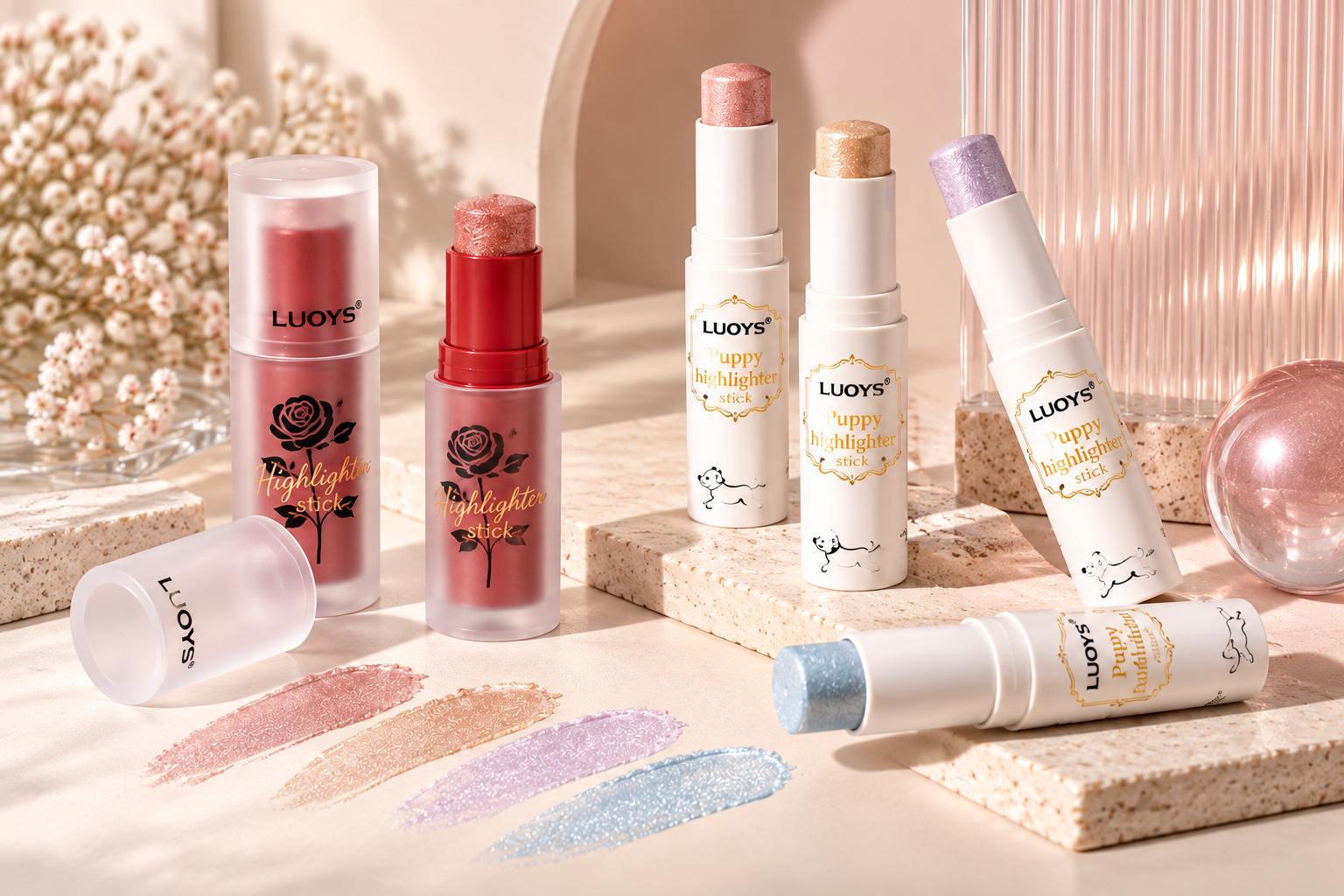
Packaging should also enter the review before formula approval is treated as final. The same product can be experienced differently depending on whether it sits in a pan, stick, compact, or another format. Brands comparing possible directions can use the manufacturer’s Highlighter, Contour & Bronzer category to review different face-makeup formats before narrowing the brief.
What needs to be checked when a promising sample moves closer to production?
There is a point in development when comments such as “make it slightly softer” need to become an approved reference. Otherwise, the project can continue changing even though everyone believes the formula is finished.
For a pressed or solid highlighter, the useful checks depend on the agreed product characteristics. Color, pickup, surface condition, payoff, physical integrity, and package fit may all be relevant. What matters is that the team knows which of these characteristics are important enough to compare again during production.
Do not treat the laboratory sample as the production specification
A development sample is evidence of the desired result, but commercial manufacturing introduces another set of conditions. Powder preparation, pressing or filling, handling, equipment, and batch scale may influence the finished product.
That is why a production discussion should answer a fairly simple question: what exactly must be reproduced from the approved sample?
For one project, color and payoff may be the most sensitive points. Another may depend heavily on surface appearance or a particular reflective effect. Writing those priorities into the approval record is more useful than building a long generic checklist.
The same principle applies when something changes. If a material has to be substituted, the relevant question is not whether the replacement has a similar description. The question is whether the finished highlighter still matches the characteristics that were approved.
How should the package be judged with the actual highlighter inside it?
Packaging approval becomes more meaningful once the cosmetic is inside the component. An empty compact or stick can demonstrate appearance and basic operation, but it cannot show how securely the product sits, how easily it can be used, or how the finished assembly behaves after repeated handling.
This is especially relevant when the package is part of the product experience rather than merely a container.
Look at the assembled product, not isolated components
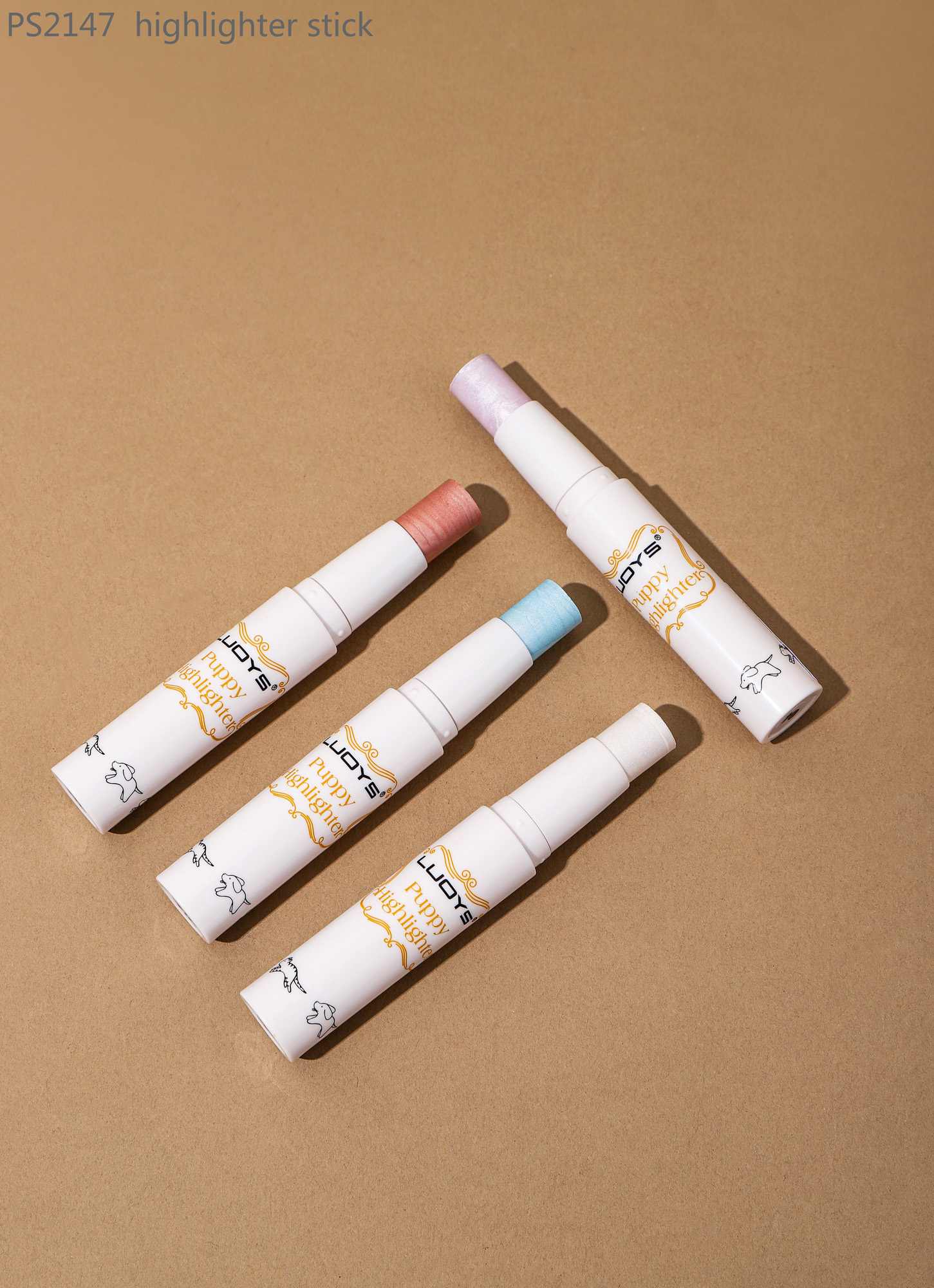
For a compact format, the reviewer might look at pan fit, closure, movement, protection of the product surface, and the condition of the assembly after repeated opening. A stick creates a different set of questions around movement, exposure, and retraction.
There is little value in forcing both formats through an identical packaging checklist. The checks should follow the component actually selected.
Once a package has been approved, substitutions also need attention. A component that looks almost identical in a supplier photograph may differ slightly in internal dimensions, closure, finish, or operation. If the original component becomes unavailable, the replacement should be reviewed with the product inside it rather than accepted solely from a specification sheet.
What should be frozen before the highlighter enters mass production?
The final approval does not need to produce an enormous document. It does need to remove uncertainty about which sample everyone is talking about.
A retained physical sample, identified formula version, shade reference, packaging configuration, and a short set of important quality characteristics can provide a workable production reference. This becomes particularly useful several months later, when a repeat order may be handled by people who were not involved in the original sampling rounds.
Keep later changes visible
Cosmetic products rarely remain untouched forever. A raw material may become unavailable, a packaging component may change, or a production adjustment may be proposed. The commercial product name can remain exactly the same while one of the inputs has changed.
The buyer needs enough information to decide whether that change matters. Sometimes a document review will be sufficient; in other cases, seeing another sample will make more sense. What should be avoided is an unrecorded change that only becomes visible when the new batch is compared with older stock.
Need Practical Support When a Highlighter Brief Moves Into Sampling?
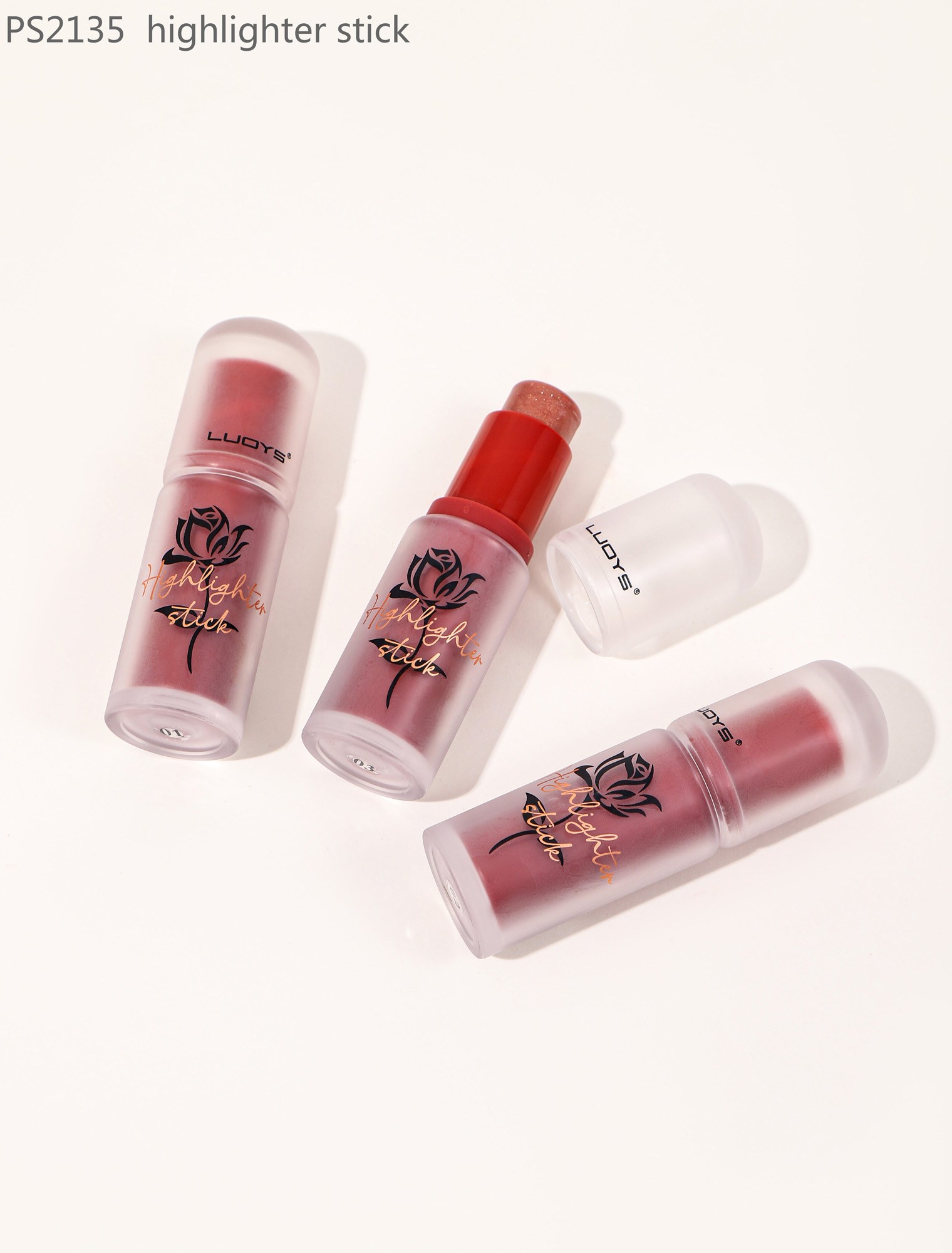
A clear brief becomes more valuable when the development and production teams can keep the same product references through sampling and manufacturing. Zhejiang Limei Cosmetics Co., Ltd. provides OEM and ODM support for color cosmetics, with its website describing R&D, quality inspection, filling, packaging, and production operations. Its published product range covers face-makeup formats including highlighter, blush, contour, bronzer, and other color cosmetics. For a custom highlighter project, that gives buyers a practical basis for discussing the brief in terms of finish, shade reference, texture, packaging, sample revisions, approval points, and the characteristics that need to remain recognizable when the product moves from a development sample into production.
Conclusion
A highlighter brief works when it reduces ambiguity without trying to do the formulator’s job. Before sampling, the brand should know which parts of the concept are fixed and which remain open for development. That usually means describing the finish more carefully, deciding how payoff should build, reviewing texture through actual application, separating shade from reflection, and bringing the final package into approval. Once a satisfactory sample exists, a small number of well-chosen references can then carry those decisions into production and make later changes much easier to judge.
FAQs
1. Is a reference product enough for developing a custom highlighter?
It is a useful starting point, but the buyer should explain which characteristics should be matched and which should not. Shade, reflection, particle appearance, texture, payoff, and application can all be interpreted differently from the same reference.
2. Why can a finger swatch give a misleading impression of a highlighter?
A finger often picks up and deposits more product than a brush. If consumers are expected to use a brush, sample approval should include that application method so pickup, payoff, fallout, and buildability can be judged more realistically.
3. How can a brand describe highlighter shine more clearly?
Separate the base shade from the reflective effect and describe whether the desired result is a fine sheen, visible shimmer, stronger sparkle, or a metallic-looking reflection. Physical references are particularly helpful when these distinctions are difficult to describe in words.
4. When should packaging enter the highlighter development process?
Packaging can be discussed early, but the final evaluation should use the actual cosmetic inside the intended component. This reveals fit, operation, protection, and handling issues that cannot be assessed from an empty package alone.
5. Does every raw-material change mean the highlighter must be developed again?
No. The significance depends on what changed and whether it affects the characteristics already approved. The change should be recorded first, then reviewed to decide whether existing references remain adequate or another sample is necessary.