

What Makes a Foundation Formula Stable Across Different Climates?
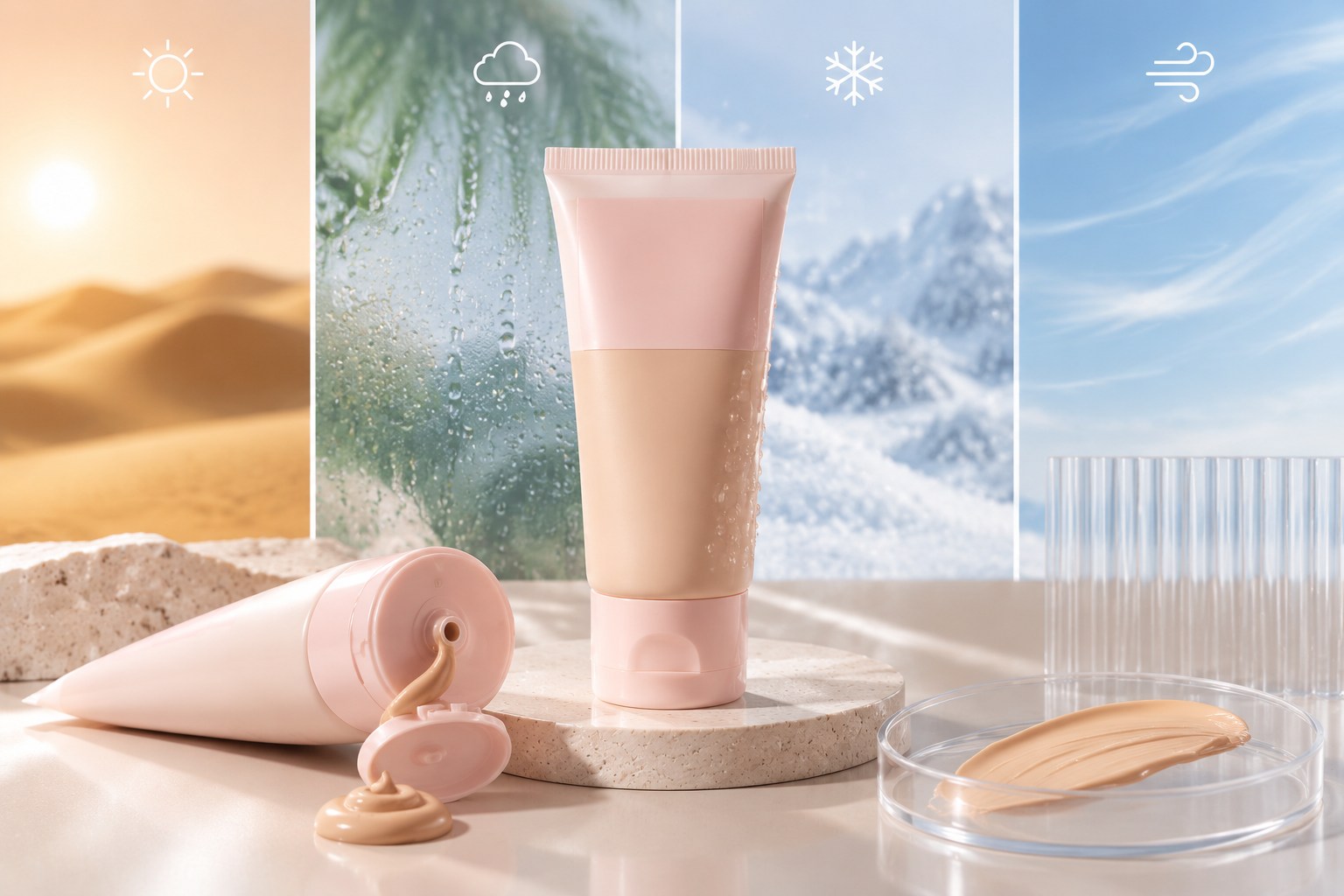
A foundation formula needs more than a good texture and attractive finish to perform reliably in different climates. For brands planning international sales, the main development challenge is keeping the same product experience when temperature, humidity, transportation conditions, and storage environments change. A formula that looks perfect during laboratory sampling may show separation, shade variation, viscosity changes, or application issues after moving through different markets. This is why purchasing teams and product developers need to evaluate climate-related risks during the development stage, including ingredient compatibility, stability testing, packaging performance, and production control, before approving a foundation for commercial manufacturing.
Why does climate become a hidden risk during foundation product development?
Foundation could be described as one of the technically complex makeup categories due to the wide range of specialty additives used in its composition, which include pigments, emollients, powders, film-forming polymers, and emulsion systems. Each of these components contributes to finishing quality and overall appearance, and extreme conditions might unveil subtle intricacies that go unnoticed on a local level.Therefore, for multinational corporations that operate on a global scale, regional climatic variations should be taken into consideration as a critical element of foundation specification.
A foundation designed for one market condition may not automatically deliver the same user experience elsewhere.
How can temperature changes affect foundation behavior?
Temperature variation can influence the physical condition of a foundation during storage and transportation. Higher temperatures may reduce viscosity, change the movement of oil phases, or increase the possibility of separation if the formula balance is not suitable. Lower temperatures may make the product thicker and affect how easily it spreads on the skin.
The key issue for buyers is not whether a formula survives a single temperature test. The more important question is whether the formula maintains acceptable appearance, texture, and dispensing performance throughout the expected supply chain.
A practical evaluation should consider:
| Risk area | What buyers need to check |
|---|---|
| Texture change | Whether the product maintains the approved sensory profile |
| Separation risk | Whether oil and water phases remain stable |
| Dispensing behavior | Whether the package delivers the expected amount |
| Appearance | Whether color, surface, and consistency remain acceptable |
The purpose of these checks is not to create a formula for one specific climate, but to establish enough stability margin for normal commercial conditions.
Why does humidity influence product expectations?
Humidity affects both formula performance and consumer perception. In warm and humid regions, users often prefer foundations that feel lighter and remain comfortable during longer wear. In dry environments, consumers may expect smoother application and a more flexible finish.
This does not mean every region requires a completely different product. Instead, brands need to define the balance between wear performance, sensory experience, and climate suitability before finalizing the formula direction.
Which formula components determine whether a foundation remains stable?
A stable foundation depends on the relationship between ingredients rather than one individual material. When a formula changes during storage, the cause is often connected to how different components interact over time.
How do emulsification and oil-phase balance affect stability?
Many foundations use emulsion systems to combine water-based and oil-based ingredients. Maintaining the correct balance between these phases influences texture, appearance, and long-term stability.
For purchasing teams, several areas require attention:
| Formula factor | Influence on product decision |
|---|---|
| Emulsion structure | Determines whether the formula maintains uniformity |
| Oil and emollient selection | Affects spreadability, comfort, and finish |
| Pigment dispersion | Influences shade consistency and coverage |
| Rheology control | Affects application and storage behavior |
These factors explain why foundation development cannot be judged only by the first sample. A sample may look acceptable immediately after preparation, but commercial production requires the formula to maintain the same characteristics through storage and repeated manufacturing.
How do pigments affect international foundation consistency?
Shade consistency is one of the most sensitive areas for foundation products. Pigments need to remain evenly distributed within the formula so that coverage and color appearance remain consistent.
For brands developing multiple shades, the concern is not only creating the correct colors but also maintaining those colors from batch to batch. Small changes in dispersion quality or formula structure can affect the final appearance.
Purchasing teams should therefore confirm how shade approval is managed, how reference samples are stored, and how production batches are compared against approved standards.
img,FA2042 foundation matte.webp
How should brands test foundation stability before international launch?
A foundation should be evaluated under conditions that reflect its actual commercial journey. Testing before mass production helps identify possible issues before they affect inventory, retailers, or consumers.
What stability checks should buyers discuss with suppliers?
The exact testing program depends on the formula and market requirements, but buyers generally need to understand how the product responds to environmental stress.
-
Important evaluation areas include:appearance changes during storage;
-
viscosity consistency;
-
shade stability;
-
separation observation;
packaging compatibility.The goal is not simply to pass a test. The goal is to understand whether the formula remains within the approved product specification after exposure to realistic conditions.
Why should testing include the final package?
Formula and packaging should be evaluated together because they influence each other during storage. A foundation that performs well in a laboratory container may behave differently when filled into its final bottle, pump, or other dispensing system.
-
Packaging compatibility evaluation helps identify issues related to:leakage;
-
dispensing consistency;
-
product recovery;
material interaction.Approving packaging only after formula development is complete can create avoidable changes later in the project.
What packaging and production factors influence foundation consistency?
A commercially successful foundation requires control beyond formulation. The production process, filling method, packaging components, and quality inspection system all contribute to whether customers receive the same product experience.
Why does packaging selection matter for foundation?
Different package structures create different technical requirements. A thicker formula may require a different dispensing system from a lighter liquid foundation. The package must allow consumers to use the product effectively while protecting formula quality during storage.
-
Buyers should evaluate:compatibility between formula and package material;
-
dispensing performance;
-
closure reliability;
appearance after storage.Packaging decisions should be made together with formula approval rather than treated as a separate branding decision.
How does production control affect repeat orders?
A successful first batch does not guarantee consistent future production. Foundation projects require clear specifications for formula characteristics, shade references, filling requirements, and quality checks.
Before placing repeat orders, buyers should understand how changes are controlled. A small adjustment in raw materials, pigment processing, or packaging components may influence the final product, so supplier communication and documentation are important parts of long-term cooperation.
How can buyers evaluate an OEM supplier for climate-adapted foundation development?
Selecting a supplier for foundation development requires more than reviewing finished samples. Buyers need to understand whether the manufacturer has the technical process to support product adjustment, testing, and repeat production.
Which supplier capabilities should be reviewed?
-
A purchasing evaluation should consider:formulation communication ability;
-
sample adjustment process;
-
quality control procedures;
-
packaging coordination;
production consistency.The supplier should be able to explain why a formula behaves in a certain way and what adjustments may be required for different market conditions.
For example, if a brand plans to sell in both dry and humid regions, the development discussion should include sensory expectations, packaging choice, testing conditions, and acceptable performance limits.
Brands can also review the wider Face Makeup category when comparing product formats and understanding how different makeup products are positioned.
Professional Technical Support from Zhejiang Limei Cosmetics Co., Ltd.
Zhejiang Limei Cosmetics Co., Ltd. provides OEM and ODM cosmetic development support covering formulation, sampling, quality management, filling, and packaging coordination. The company works with beauty brands on skincare and color cosmetic projects, supporting product development from early concept communication through production preparation. Buyers can review the company background through the official About Us page. For foundation-related development, technical discussions generally focus on formula objectives, shade requirements, packaging compatibility, testing expectations, and production consistency to help ensure the finished product meets the intended market conditions.
Conclusion
The foundations’ stability in various climates is determined by the interaction of formulation, packaging, testing, and production control. Thus, buyers must consider potential environmental hazards to the product before introducing it to the market. Such opportunities as the detailed product brief, realistic stability profile, and effective communication with suppliers can mitigate the risks of development and ensure the uniformity of future sales in different climatic conditions.
FAQs
1. Why can the same foundation formula perform differently in different climates?
Temperature, humidity, storage conditions, and transportation environments can affect foundation texture, stability, and application performance. A formula suitable for one market may require additional evaluation before entering another climate.
2. What should buyers check during foundation stability testing?
Buyers should review appearance, viscosity, separation behavior, shade consistency, and packaging compatibility. The testing plan should reflect the expected storage and transportation conditions of the target market.
3. Does packaging affect foundation formula stability?
Yes. Packaging influences dispensing performance, product protection, and potential material interaction. The final formula should always be evaluated together with the intended package.
4. Do global markets always require different foundation formulas?
Not necessarily. Some formulas can perform across multiple regions when properly developed, while others may need adjustments based on climate conditions, consumer preferences, and usage expectations.
5. What information should brands prepare before starting foundation development?
Brands should define target markets, climate conditions, coverage level, finish preference, shade requirements, packaging expectations, and quality standards before requesting samples from an OEM supplier.