

What the EU PPWR Packaging Regulation Means for Cosmetic Brands in 2026
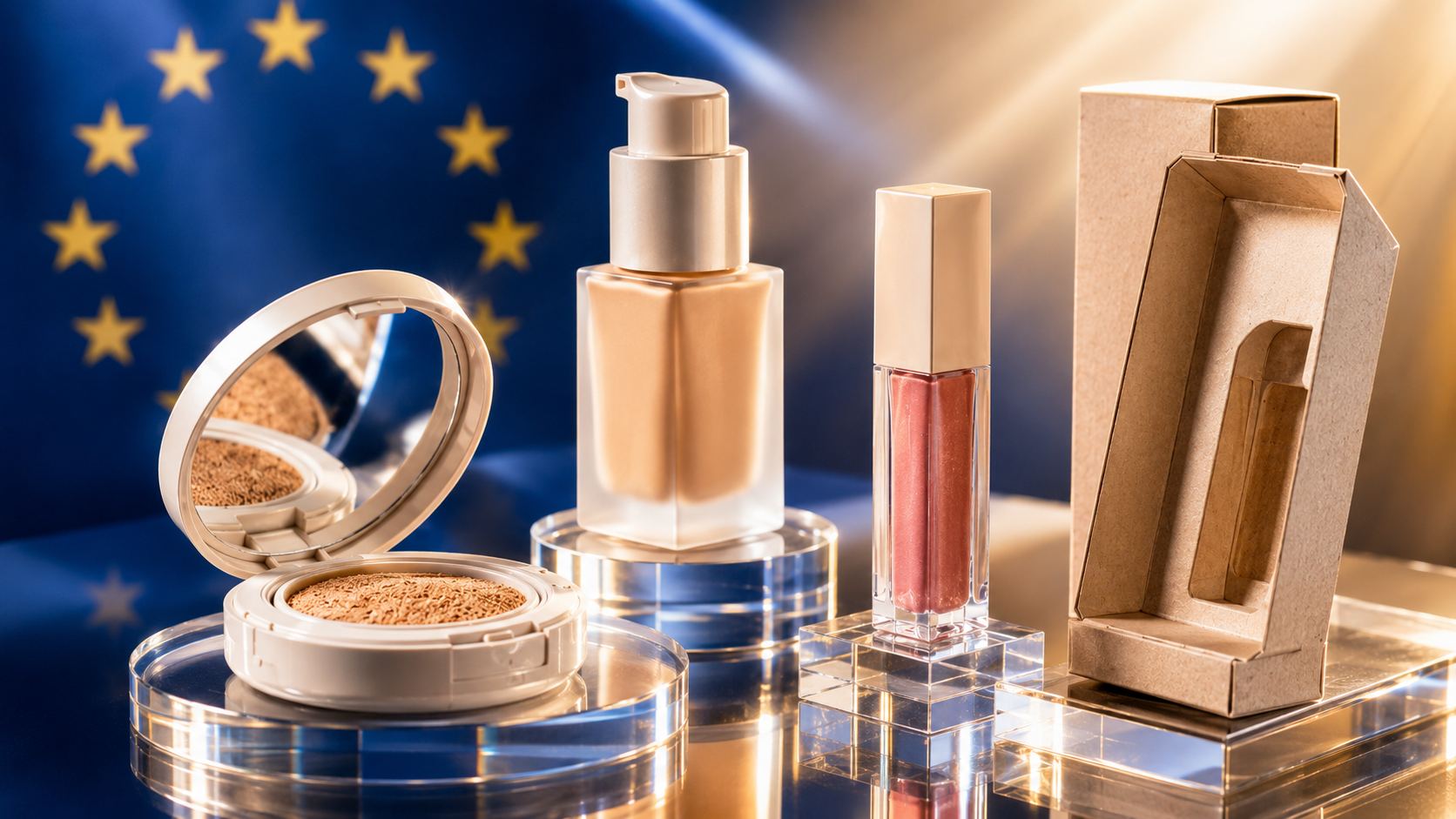
The EU Packaging and Packaging Waste Regulation (PPWR) due to come into force in 2026 will fundamentally change the way that cosmetic products are packed, and how companies source, design and manage packaging. The new regulations are aimed at reducing packaging waste and increasing the level of recyclability of packaging in order to promote a more Circular Economy throughout the EU. For cosmetics companies packaging is not just functional; it is also often a major part of the brand image. The new regulations will affect all aspects of packaging and will demand fundamental change from companies in terms of the materials that they use, the labeling that they apply and how products are delivered to end-users.
What Are the Core Objectives of the EU PPWR?
In order to understand the operational effects of the PPWR, first we need to understand the drivers of its development.
Key Goals Behind the Regulation
The PPWR is a new European regulation on packaging and packaging waste. It will replace the existing Packaging Waste Directive and aims to harmonize packaging rules across all EU member states. A 15% reduction in packaging waste per capita by 2040 is one of the main targets and this is to be achieved by increasing the material efficiency of packaging. The PPWR sets minimum recycled content for all types of packaging and also sets out requirements on recyclability. The aim is that by 2030 the majority of packaging on the market will be economically recyclable.
Implications for Cosmetic Packaging
Plastic components like the pump and cap of cosmetics will be restricted for single use. Designs for refillable and reusable products will be rewarded with design credits and labeling. In addition, the cosmetics industry will have to state on the product label the composition of the materials and the recyclability of the product. This will be a unique labeling requirement, that at the same time will be part of larger transparency initiatives within the EU.
How Will the PPWR Affect Cosmetic Brand Operations?
As the cosmetic company’s compliance deadlines draw near, it will be crucial for them to start transitioning from a focus on sourcing to a focus on logistics.
Changes in Material Sourcing and Design
To meet recyclability thresholds, brands will need to shift toward mono-material solutions that simplify sorting during recycling. Glass and aluminum are expected to regain popularity due to their high recovery rates—above 75% within the EU recycling infrastructure. Conversely, multi-layer plastic films commonly used in sachets or tubes will need redesigning or replacement with compostable or paper-based alternatives. For example, some European skincare producers have begun transitioning airless pumps into modular aluminum casings with detachable PET inserts to comply with future standards.
Adjustments in Supply Chain Management
In addition to design compliance, suppliers must provide documentation that confirms the percentage of recycled material in accordance with the EN certification. The new labeling of articles for the distribution on the EU single market by players active in this area will also have to comply with new rules. Failure to comply with these rules will result in penalties or even withdrawal from the market – a heavy loss for retailers, which actively promote products on the shelves internationally.
What Economic Impact Can Cosmetic Brands Expect?
When making changes to the way a brand operates there are financial implications that need to be managed effectively by the brand.
Cost Considerations and ROI Outlook
According to the 2023 sustainability report by McKinsey, an increase in production costs of 10–20% in the short term is likely for sustainable packaging. However, this could be recouped in the long term by companies that start early on by using the same materials and thus avoiding higher waste management costs. Consumers are willing to pay a premium for sustainable packaging, as Euromonitor (2024) states, of up to 12% above the regular price for a product with sustainable packaging. This could thus in the long run be used to refund the higher initial costs for companies.
Market Competitiveness and Brand Perception
Compliance with regulations can be a plus for companies in their strive for differentation, while at the same time they can capitalize on the extra value that they generate through transparent disclosure of sustainability metrics to retailers, investors and eco-consumerists who are increasingly asking for traceable supply chains.
How Can Cosmetic Companies Prepare for Compliance?
Preparing to enter a new market requires more than isolated measures; it is a matter of structured planning across all areas of a company.
Steps Toward Regulatory Readiness
A phased approach to change allows risks to be managed while production continues to run.
Conducting Packaging Audits
The first step for companies is an audit of the current packaging portfolio against the recyclability criteria of PPWR. In particular, attention must be paid to packaging materials of high risk, such as laminated plastics, which might no longer be recyclable after 2026.
Collaborating with Certified Suppliers
By working with suppliers that offer recycled materials with a traceability certificate according to EN standards, on one hand the quality and correct documentation can be assured. On the other hand, by concluding long-term agreements with these suppliers, the required materials can also be guaranteed in the future increasing demand for corresponding approved materials.
Implementing Data Management Systems
Digital tracking systems for production enable efficient reporting of compliance. By integrating them with lifecycle assessment (LCA) software, production can be monitored with respect to its carbon footprint or resources usage. This allows companies to measure their progress over time and, in future, provide the corresponding key performance indicators for disclosure.
Why Is Collaboration Across the Supply Chain Critical?
The PPWR regulates an extended producer responsibility (EPR) concept in which all actors in the value chain, from suppliers of raw materials to retailers, are made responsible. Manufacturers alone are not in a position to fulfill their obligations, and measures by several manufacturers such as joint recycling facilities or joint concepts for refill stations are more cost-efficient and will more easily meet the required targets than a sum of isolated measures by individual manufacturers intended to fulfill individual obligations. This enables a change towards a more sustainable system instead of mere compliance with all requirements and obligations.
How Do Innovation and Sustainability Intersect Under PPWR?
While encouraging innovation, the new regulatory framework will make it necessary for companies to innovate in order to survive.
Emerging Trends in Eco-Friendly Cosmetic Packaging Solutions
The current and promising trends for future cosmetic packaging strategies.
Refillable Systems Gaining Momentum
Many luxury skincare brands are testing out refill pods that contain up to 70% less plastic than their single-use counterparts. The refillable systems are designed to look just as high-end as their throw-away counterparts while greatly reducing waste. Achieving this balance has proven to be a challenge for many brands looking to offer a more sustainable option in large quantities.
Biodegradable Materials Entering Mainstream Use
Recent developments in bio-based polymers offer very durable, yet compostable solutions comparable to traditional plastics, which are of equal quality and not unsightly, nor prone to spoilage.
Smart Labeling for Transparency
QR codes linking to the digital product passports of products are increasingly used to enable real-time education of consumers. They enable instant access to information such as the material’s origin, recyclability score and environmental impact assessment.
How Zhejiang Limei Cosmetics Co., Ltd. Supports Sustainable Transitions
Zhejiang Limei Cosmetics Co., Ltd., a long-established cosmetics manufacturer recognized for precision formulation capabilities, has been aligning its operations with sustainability frameworks like the PPWR since early pilot phases of policy discussion. The company collaborates closely with European clients on redesigning primary and secondary packaging using recyclable PET, glass, or aluminum components while maintaining aesthetic differentiation crucial for luxury segments. Beyond manufacturing execution, Zhejiang Limei Cosmetics Co., Ltd. assists clients with lifecycle assessments, supplier certifications, and pilot testing of refillable formats compatible with future EU standards. By embedding these services into broader supply chain strategies rather than isolated projects, Zhejiang Limei Cosmetics Co., Ltd. helps brands reduce compliance risks while preserving creative flexibility throughout development cycles.
Conclusion
The EU PPWR is a turning point for cosmetics manufacturers active on the European market or exporting to this market with strict regulations. By acting early on, cosmetics manufacturers not only comply with the new sustainability mandates, but also can develop responsible innovations and transform them into opportunities for growth for their brand. From the search for mono-materials to the installation of smart labeling, all decisions of cosmetics manufacturers will have to contribute to the objectives of the circular economy of the policymakers. Manufacturers will have to work in close collaboration with their suppliers and manufacturers, in order to make the transition as smooth as possible and to maintain their margin while the expectations of consumers are changing. In this way, early actors will become the leaders of the sustainable beauty manufacturing of tomorrow.
FAQs
1. What is the timeline for full enforcement of the EU PPWR?
The regulation is expected to be fully implemented by mid‑2026 after final approval by member states, though transitional periods may vary depending on packaging type.
2. Which cosmetics will be most affected by these changes?
Products that use mixed-material containers such as airless pumps or tubes with laminated films will be most affected and subject to greatest redesign constraints as opposed to single-material jars and bottles.
3. How can Small Cosmetic Manufacturers manage the costs of compliance?
By joining a collective recycling scheme or by using a contract manufacturer who is already compliant with the PPWR requirements of the cosmetic product in question and thus the costs of the necessary infrastructure can be shared effectively without the need for a large initial investment.
4. Does this only apply to EU brands?Will non-EU brands selling in Europe also need to comply?
Yes. The PPWR applies to all products placed on the EU market, regardless of whether they are manufactured or assembled inside or outside the EU.
5. How can this regulation foster innovations?
The regulation creates new business opportunities for refill systems, for biodegradable materials, for modular designs as well as for transparent labeling. All these fields are suitable for innovative and future-oriented brands which not only comply in a sustainable way but also differentiate themselves from their competitors.