

How Should Beauty Brands Test Mascara Formula and Brush Performance Before Mass Production?
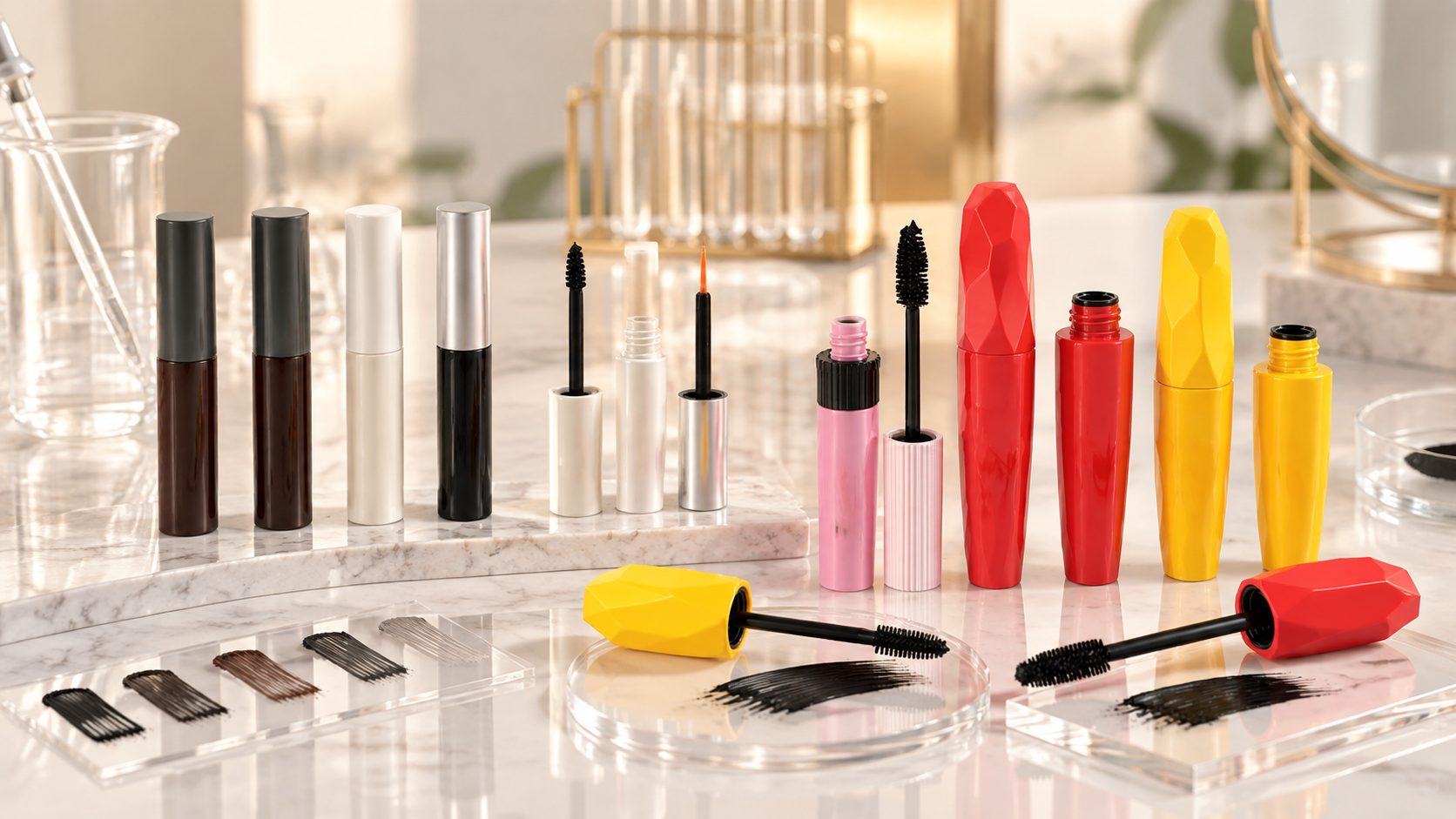
A mascara sample rarely moves from the first trial directly into mass production. Between the first formula test and the final manufacturing order, brands usually discover details that cannot be judged from a simple application test. A formula may create the desired lash effect but feel different after being matched with another brush. A brush may look suitable but leave too much product on the lashes once combined with a specific texture. Packaging can also change the way consumers experience the product. For this reason, mascara testing before production is less about finding a perfect sample immediately and more about understanding how each part of the product works together before a commercial decision is made.
What usually needs to be checked after the first mascara sample is created?
The first sample is often used to confirm whether the product idea is achievable. At this stage, a brand may already have a target effect in mind, such as natural definition, stronger volume, visible length, or long-lasting wear. However, the first sample often raises more questions than answers.
A mascara is a product where small differences can become noticeable during use. The amount of formula transferred from the brush, the way the product separates lashes, and the feeling after drying can all influence whether the sample matches the original concept.
Why is the first visual result not enough?
A quick application can show whether the general direction is correct, but it cannot reveal every performance issue.
For example, a sample may create impressive volume during the first coat. After applying a second layer, however, the lashes may begin to stick together. In another case, a formula may feel smooth but fail to maintain the expected appearance after several hours.
These situations do not always mean the formula itself is unsuitable. The final result depends on several connected factors:
-
formula viscosity;
-
brush structure;
-
wiper design;
-
amount of product transferred during application;
-
drying behavior.
During development, identifying the actual reason behind a problem is usually more valuable than simply requesting a new sample.
Which formula characteristics deserve attention?
When reviewing mascara samples, the focus is normally placed on how the product behaves rather than only on the final appearance.
Useful observations include:
| Review point | What it helps identify |
|---|---|
| Product pickup | Whether the brush carries an appropriate amount |
| Application flow | Whether the formula spreads evenly |
| Layering result | Whether additional coats improve the effect |
| Drying behavior | Whether the finish develops as expected |
| Lash separation | Whether the final look remains clean |
A mascara designed for everyday use may require a different balance from one intended for a dramatic makeup effect. The testing standard needs to match the product direction.
Why does brush selection affect the final mascara experience?
During mascara development, the brush is sometimes treated as a packaging decision. In reality, it has a direct influence on performance because it controls how the formula reaches the lashes.
Two mascaras with similar textures can create very different results when different applicators are used.
How can brush structure change application?
The brush determines several parts of the user experience.
A larger brush may cover more lashes quickly and support a fuller appearance. A smaller brush may provide more control, especially when precision is important.
The main points usually considered include:
-
brush shape;
-
bristle density;
-
spacing between bristles;
-
flexibility;
-
tip design.
A brush with dense bristles may hold more formula, while a more open structure may help improve separation. The right choice depends on the intended effect rather than a single standard.
What happens when a formula and brush are developed separately?
This is one of the common reasons for additional sampling rounds.
A formula may appear successful during laboratory testing with one applicator. After the final brush is introduced, the amount of product delivered to lashes may change.
For instance, a brush may remove too much formula from the bottle, making the mascara appear less effective. Another brush may carry excessive product and create a heavier finish.
Testing the formula together with the final brush earlier in development can reduce these unexpected differences.
Brands comparing mascara formats can refer to the manufacturer’s Mascara category for product references and development directions.
Why can mascara packaging influence formula performance?
Although mascara packaging is often discussed from a design perspective, it also affects daily product performance.
The bottle, wiper, brush, and formula create a complete application system. A change in one part can influence how the consumer experiences the product.
How does the wiper affect product application?
The wiper controls how much formula remains on the brush before application.
This small component can influence several user experiences:
-
whether the brush feels overloaded;
-
whether the formula applies evenly;
-
whether multiple coats remain comfortable;
-
whether the package stays clean during use.
A formula that performs well in an open container may behave differently once placed inside the final package.
Why should filled samples be reviewed before production?
Empty packaging can confirm appearance and basic structure, but it cannot show the complete product behavior.
Once the mascara is filled, the relationship between the formula and package becomes clearer. The brush movement, product removal, and application result can all be evaluated under more realistic conditions.
This stage is especially useful before large quantities of components are produced because packaging changes later in the process can become expensive.
How should brands compare mascara samples before approving mass production?
The difference between an acceptable sample and an approved production sample is usually found in the details. During early development, comments are often based on general impressions. A brand may describe a sample as “too heavy,” “not enough volume,” or “not smooth enough.” These comments show the direction of adjustment, but they do not always explain what needs to change.
As the project moves closer to production, the evaluation needs to become more specific. The team needs to understand whether the issue comes from the formula, brush, package, or the combination of all three.
What makes sample feedback useful during development?
A useful review describes what happened during testing.
For example, if the result feels too heavy, the reason may be:
-
too much formula remaining on the brush;
-
insufficient separation between lashes;
-
a texture that builds too quickly;
-
a brush design that distributes the product unevenly.
This type of information gives the development team a clearer direction for the next adjustment.
A simple record of the sample history can also prevent repeated discussions. When several versions have been tested, it becomes easier to understand which changes improved the product and which changes created new issues.
How should different samples be compared?
The comparison should follow the original product concept rather than personal preference.
A volume-focused mascara and a natural-definition mascara may use different evaluation standards. One may prioritize stronger visual impact, while another may focus on a cleaner and lighter application.
Before approval, the team usually needs to confirm:
-
whether the visual result matches the intended concept;
-
whether the brush supports the formula;
-
whether the package works correctly;
-
whether the product experience remains stable after repeated use.
A sample is closer to production readiness when these points are understood clearly.
What needs to be confirmed before a mascara project enters mass production?
The move from development to production is where a product concept becomes a manufacturing requirement.
A laboratory sample demonstrates what the product can achieve. Mass production requires proving that the same characteristics can be reproduced consistently.
This difference is especially important for mascara because the consumer interacts directly with the application experience. A small change in formula texture or brush performance can be noticed immediately.
Which product details need a clear production reference?
Before production begins, the approved version should be clearly identified.
The reference normally includes:
-
formula version;
-
brush specification;
-
packaging structure;
-
product appearance;
-
key performance expectations.
These details help different teams work from the same understanding. They are also useful when repeat orders are placed later.
How should production changes be reviewed?
Changes may happen after approval for different reasons. A component may become unavailable, a material may require adjustment, or a production process may need improvement.
Not every change creates a visible difference. However, any modification that may influence application, appearance, or product stability should be reviewed before it becomes part of regular production.
Need Practical Support When Mascara Development Moves Into Production?
When a mascara project enters the manufacturing stage, the main challenge is maintaining the connection between the approved sample and the final commercial product. Zhejiang Limei Cosmetics Co., Ltd. provides OEM and ODM support for color cosmetics, with its website describing R&D, quality inspection, filling, packaging, and production capabilities. The company’s Mascara category provides product references for different mascara formats, while its Service information introduces support available during customized cosmetic projects. For brands developing mascara products, discussions around formula adjustment, brush matching, packaging compatibility, sample review, and production control help create a clearer connection between the original concept and the final manufactured product.
Conclusion
Mascara testing before mass production is a process of understanding how each part of the product affects the final user experience. Formula performance cannot be separated from brush design, packaging structure, and manufacturing conditions. A sample that looks successful at an early stage still needs to be reviewed as a complete system before production begins. By identifying possible issues during development and keeping clear approval references, brands can reduce unnecessary adjustments and create a more reliable path from sampling to commercial launch.
FAQs
1. Why can the same mascara formula perform differently with different brushes?
The brush changes how much formula reaches the lashes and how the product is distributed. Differences in shape, size, and bristle structure can influence separation, volume, and application control.
2. What should be checked during mascara sample testing?
The review can include formula texture, product pickup, lash separation, drying behavior, brush performance, packaging function, and whether the final effect matches the original product direction.
3. Why should mascara packaging be tested with the formula?
The bottle, wiper, brush, and formula work together during application. Testing them together helps reveal issues that may not appear when each component is reviewed separately.
4. How can brands improve communication during mascara development?
Detailed feedback is more useful than general comments. Explaining whether a problem comes from texture, brush performance, application, or packaging helps the development process move more efficiently.
5. What should be confirmed before mascara mass production?
The approved formula, brush design, packaging structure, appearance reference, and important product requirements should be confirmed before production starts.